
A Clockwork Red
Take your time, hurry up. The choice is yours. Don't be late.

Day 66 Of The 2025 MLB Season
It’s important for shortstops to have a good clock—a sense of how much remaining time it will take the runner to get to first (t_Run), how much time it will take to throw the ball there (t_Throw), and how each intermediate action must to be approached to make sure that t_Throw stays under t_Run. Charge the ball or play back, throw to first or eat it, set feet or jump throw, take a beat to get balanced or throw on the run, your hardest throw or your most accurate throw, etc.? It’s all clock.
While it’s an important skill with tangible results, it’s also a very fun skill with aesthetic results. No player has ever had a better clock than Andrelton Simmons, and in his prime he used that clock to make every play at first exactly as close as every other: Runner out by a step, whether Simmons had ranged deep into the hole or just picked up the two-hopper directly at him.
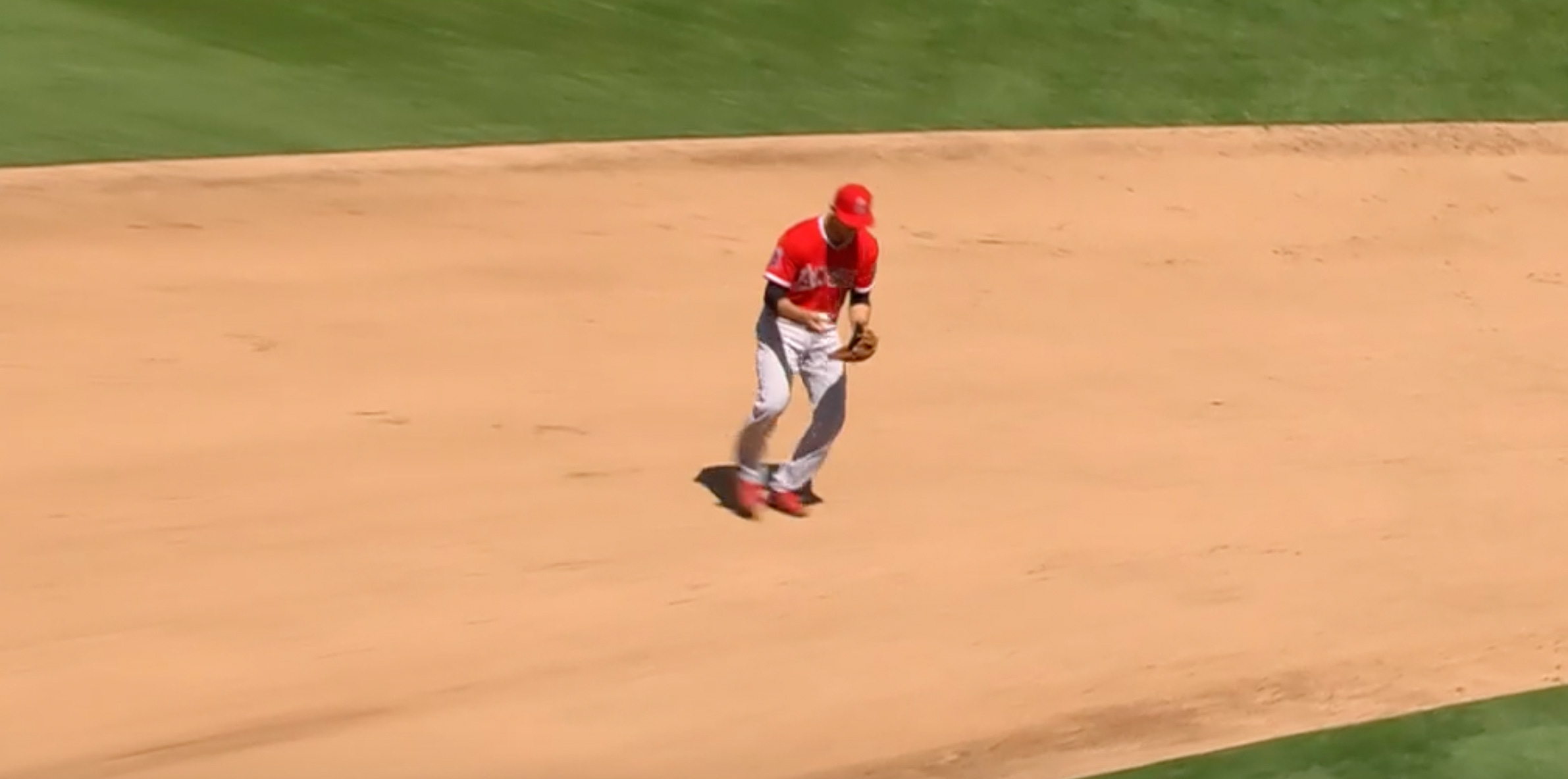

It was a game within the game for him, a self-issued challenge, perhaps for his own amusement or perhaps for mine. He rushed only as much as he needed to, and used the rest of the time to get set, get square, get acquainted with the ball, and get the runner to start to believe he might actually have a chance, like a losing Lotto scratcher front-loading two pictures of the prize.
In the most extreme example I can recall, he made a nice play just casually enough to get the runner—but only after a replay review.
So nice. He eventually got the out and, while the umps in New York studied the play, he even got to take a little two-minute break.
**
Shortstops do lesser versions of this all the time, taking an extra shuffle step when they have the time. Very few have the audacious clocks that Simmons had. Most will only turn “out by four steps” into “out by three.”
The active exception is Elly De La Cruz who, like Simmons, also has an elite arm and also lets routine plays at first get as close as the nervous viewer can stand. Perhaps an arm that strong gives a shortstop the confidence to play around with the clock, certain he can overtake any runner when he must; more likely, having an arm that strong makes a guy look for ways to show it off.
So sometimes De La Cruz will play to the clock with no other purpose than to show off the arm. When Trea Turner—literally the fastest man in the game this year, one of the few peers whose speed might cause EDLC envy—hits it to him, De La Cruz shuffles five steps while Turner races down the line. His shuffling lets the play get perilously close. Now, darnit, De La Cruz has no choice but to [pulls out comically large cannon] pull out the big gun. Even the visiting broadcasters like that throw:
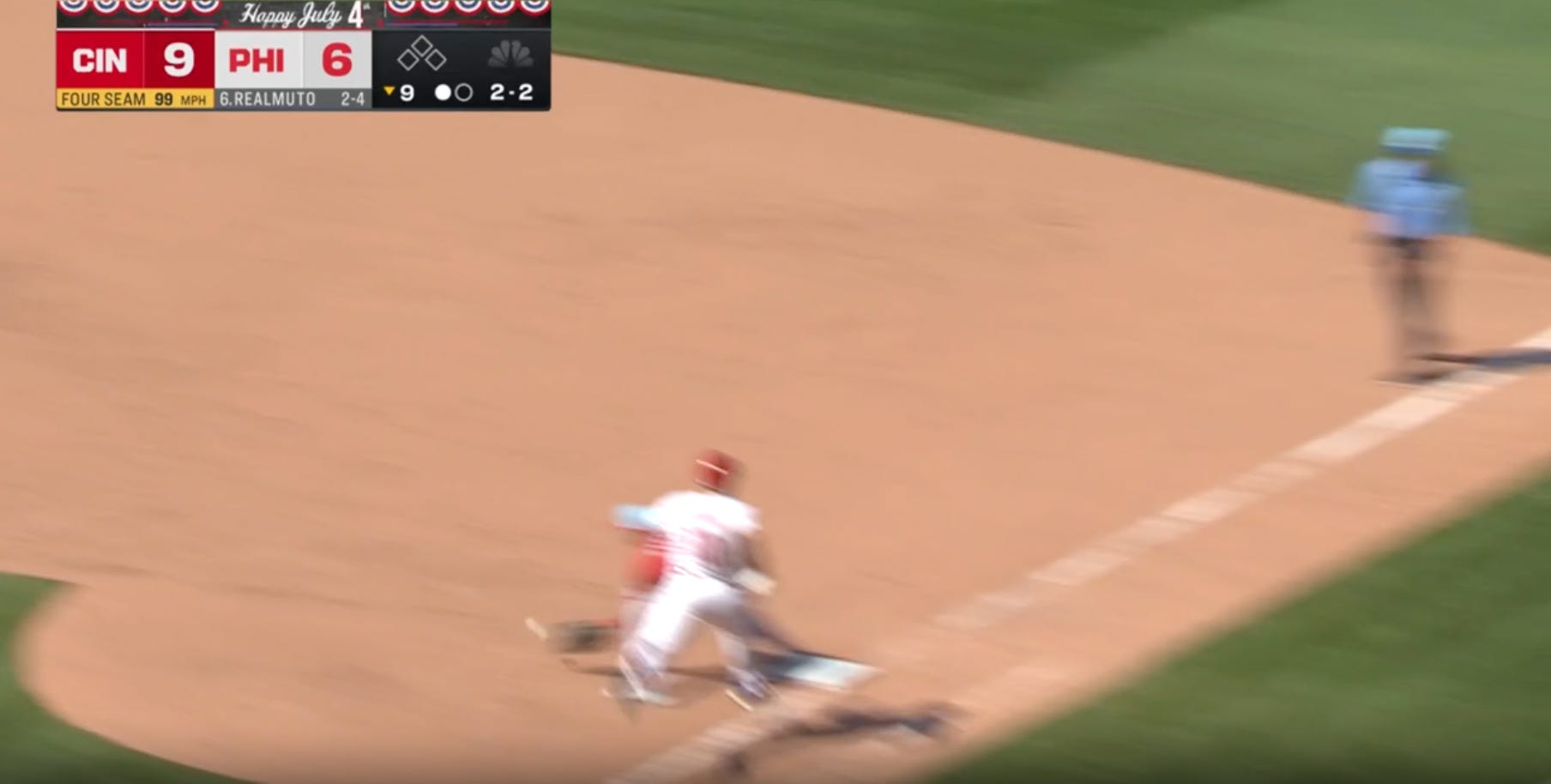
But sometimes it seems like it’s just about being controlled, about trusting his arm and his clock and play a bit more conservatively. When he wants to take an extra step to square himself on a ball up the middle, here’s how close he lets J.T. Realmuto get:
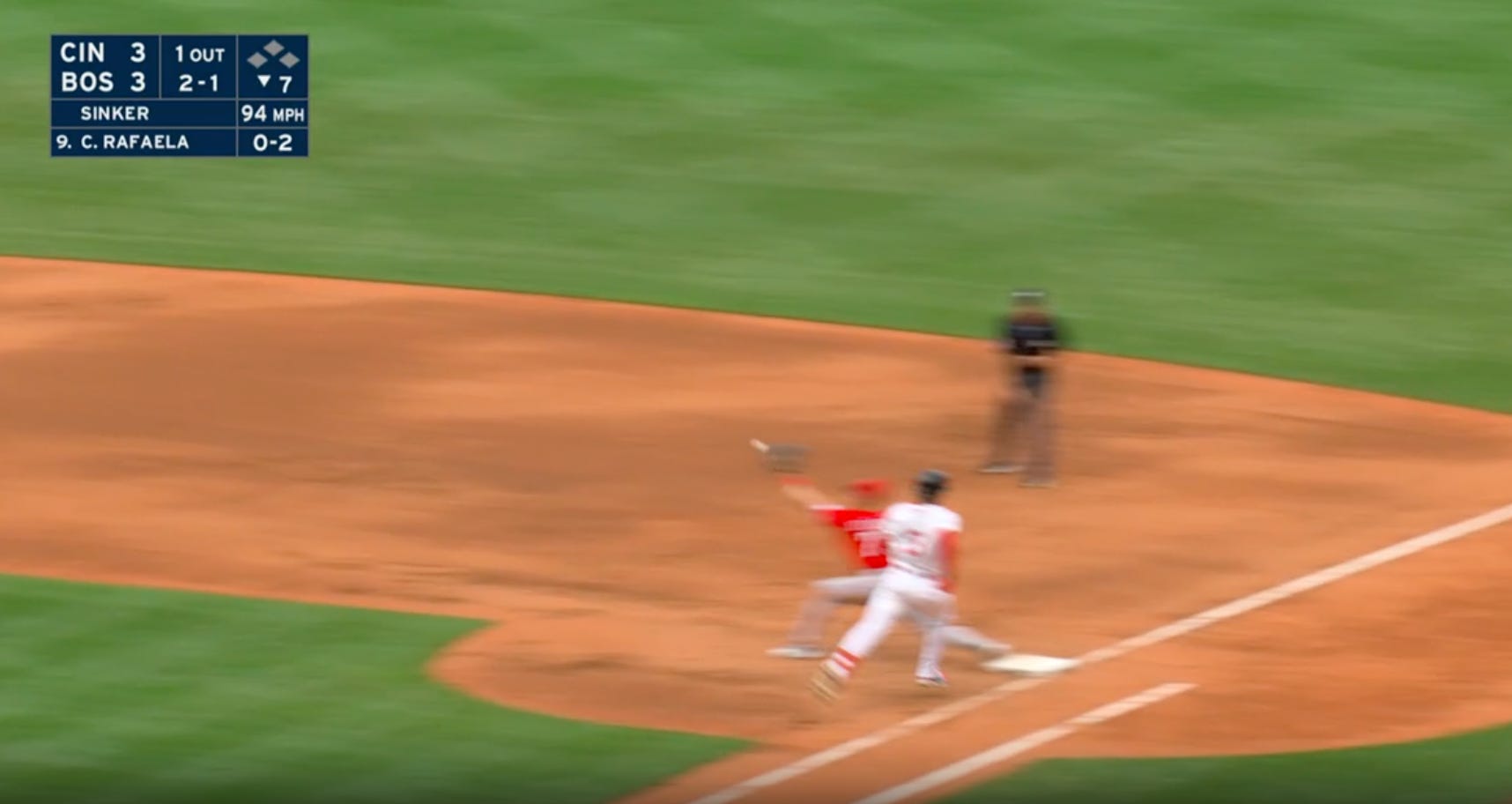
When he wants to stay back and play a ball on the extra hop, here’s how close he lets Ceddanne Rafaela get:
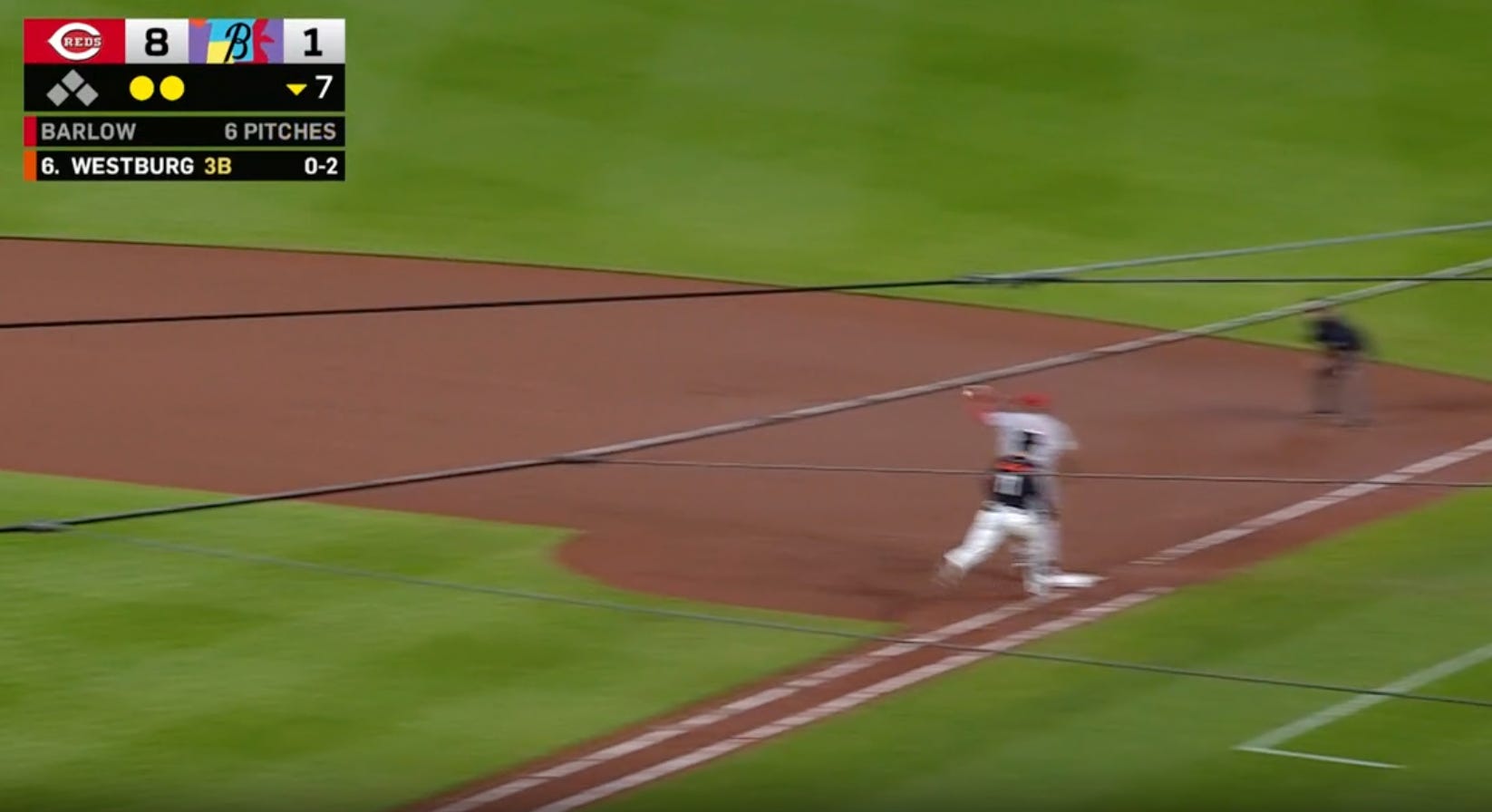
When he just wants to give his glove a little punch so he can throw in rhythm, here’s how close he lets Jordan Westburg get:
When he wants to do a little twirl & skip so he can line himself up with his target, here’s how close he lets Jackson Chourio get:
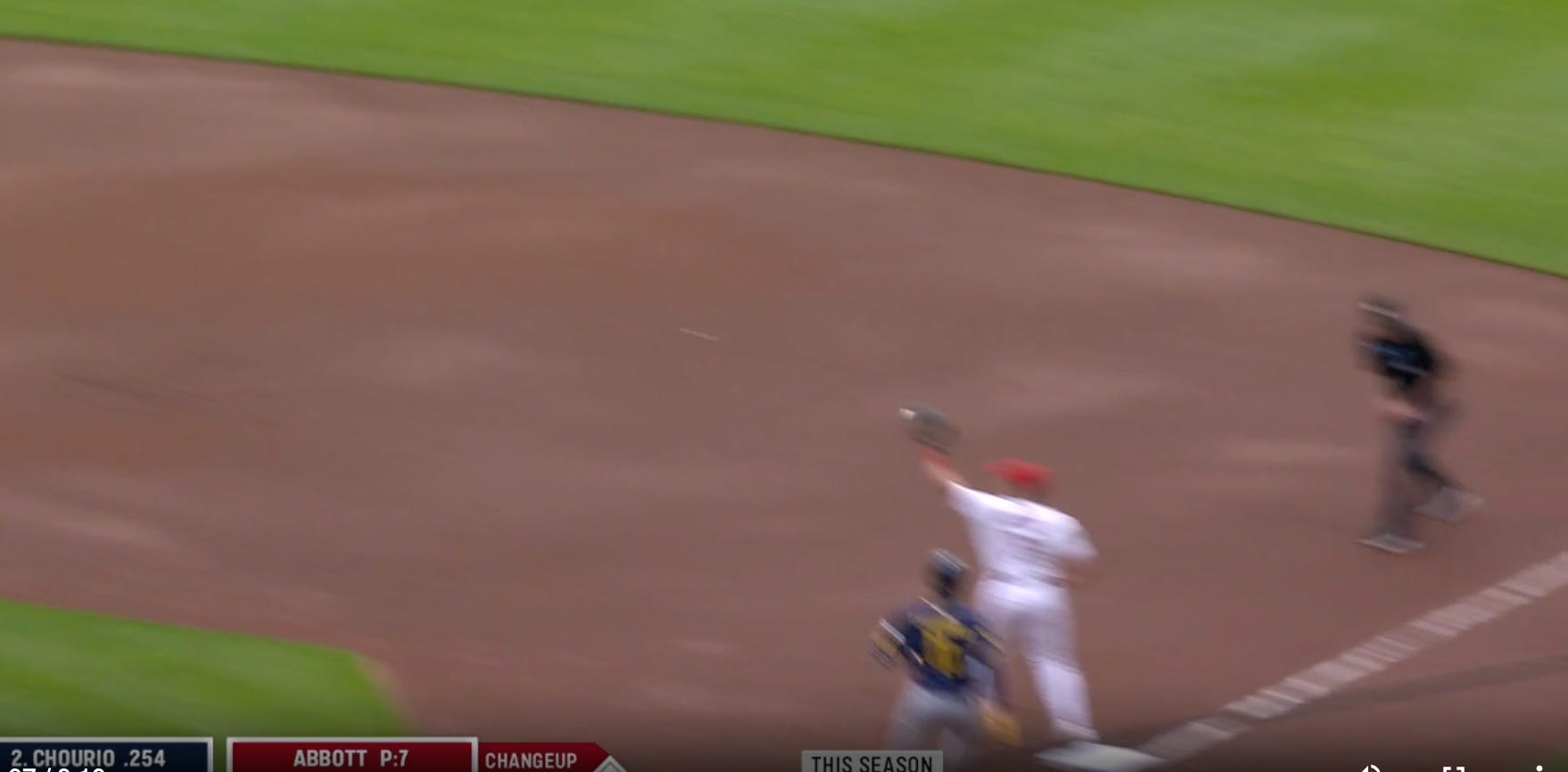
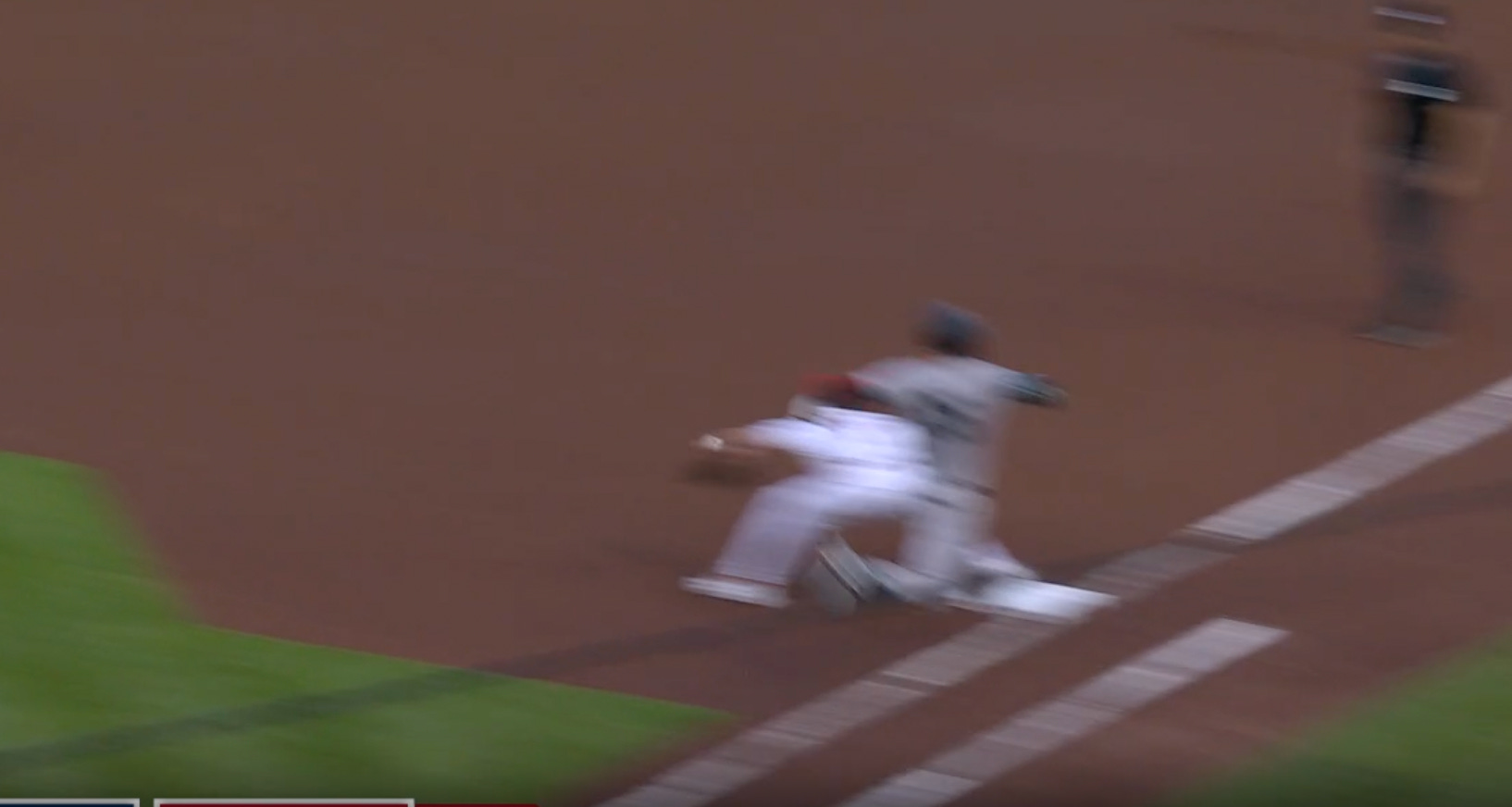
And, to go back the start, when there’s really no apparent motive except putting some heat in the mustard, here’s how close he lets Cody Bellinger get:
**
Ah, but there is a problem. Andrelton Simmons was one of the three greatest defensive shortstops who ever lived. Elly De La Cruz is more human than that, and his arm is both one of his greatest strengths and, on defense, definitely his greatest weakness. He led the league in errors last year and leads the league again this year, with 19, of which 13 are throwing errors.
It’s a fine line between taking one’s time to avoid rushing the throw and taking one’s time to force oneself to rush the throw. I’d put this play into the latter category:
