

Day 32 Of The 2025 MLB Season
The earliest reference to the Little League Home Run on newspapers.com dates to 1991, when Dave Henderson hit an RBI double, moved to third on the throw home, and scored when that throw went wild. “You just run until the ball stops rolling,” Henderson said after the game. “We call that a Little League home run.”
Like all unofficial baseball language, our personal definitions for Little League home run vary. Many announcers will use those words to describe a triple and an error (which is basically what Henderson’s was—he went to third in a normal sequence and scored on a late errant throw). If there is an authority on Little League home runs, it’s Chuck Hildebrandt, who presented on the topic at the 2015 SABR convention. His definition was much stricter:
The batter scores, and either
Two errors are committed on the play; or
One error is committed on the play, which is not an extra-base hit, and the error is charged to a non-outfielder.
I have no problem with Hildebrandt’s conclusions—he did a lot of work!—but my own preference is for the most expansive definition of Little League home run, as Dave Henderson’s was: Any play where the batter scores without hitting a home run. A triple extended by a wild throw is a) very common in Little League and b) not an actual home run, so I’d consider “Little League home run” the right term to describe it. That hypothetical play is not a very interesting or satisfying LLHR, but that’s okay. Ryan Yarbrough’s fastball isn’t a very interesting or satisfying fastball, but we still call it what it is.
By either and any standard, the walkoff ending of the Giants’ victory on April 27 counts:
***
The plot of every ball in play is the act of taming something wild. The bat’s energy launches a ball out into 100,000 square feet of sparsely populated wilderness. The defense hunts the ball down, redirects it, pens it, teaches it manners, turns it into a Starbucks. Once the defense is in complete control of the ball, the play is generally over.
Put another way: Almost every play is “run until the ball stops rolling,” and defense is the act of stopping the rolling.
Rather than denying LLHR status to the lesser LLHRs, I would prefer to acknowledge what makes some more satisfying. It comes down to one basic factor:
Who made the ball wild—the batter, or the defense?
One-Star LLHRs:
Pretty much any extra-base hit makes for, at best, a one-star LLHR. The batter hit the ball over the defense. By old-timey baseball standards—pre-fences—most of those would actually have been home run home runs. It’s still fun to watch a batter run until he’s gasping because the defense is making buffoonery around him:
But only one star of fun.
Two-star LLHRs:
The batter doesn’t break the bounds of the defense on his own. But thanks to his opponents’ ineptitude, the ball nevertheless escapes, usually by skipping under the glove of a careless outfielder. Since nobody is bothering to back up routine singles, the ball rolls almost forever:
These are Straight-Line LLHRs. This isn’t a LLHR by Hildebrandt’s revised standards—there’s only one error, and it’s on the outfielder. But it’s four bases on a bloop single. If that’s not Little League, what exactly are we doing with these words?
Three-Star LLHRs:
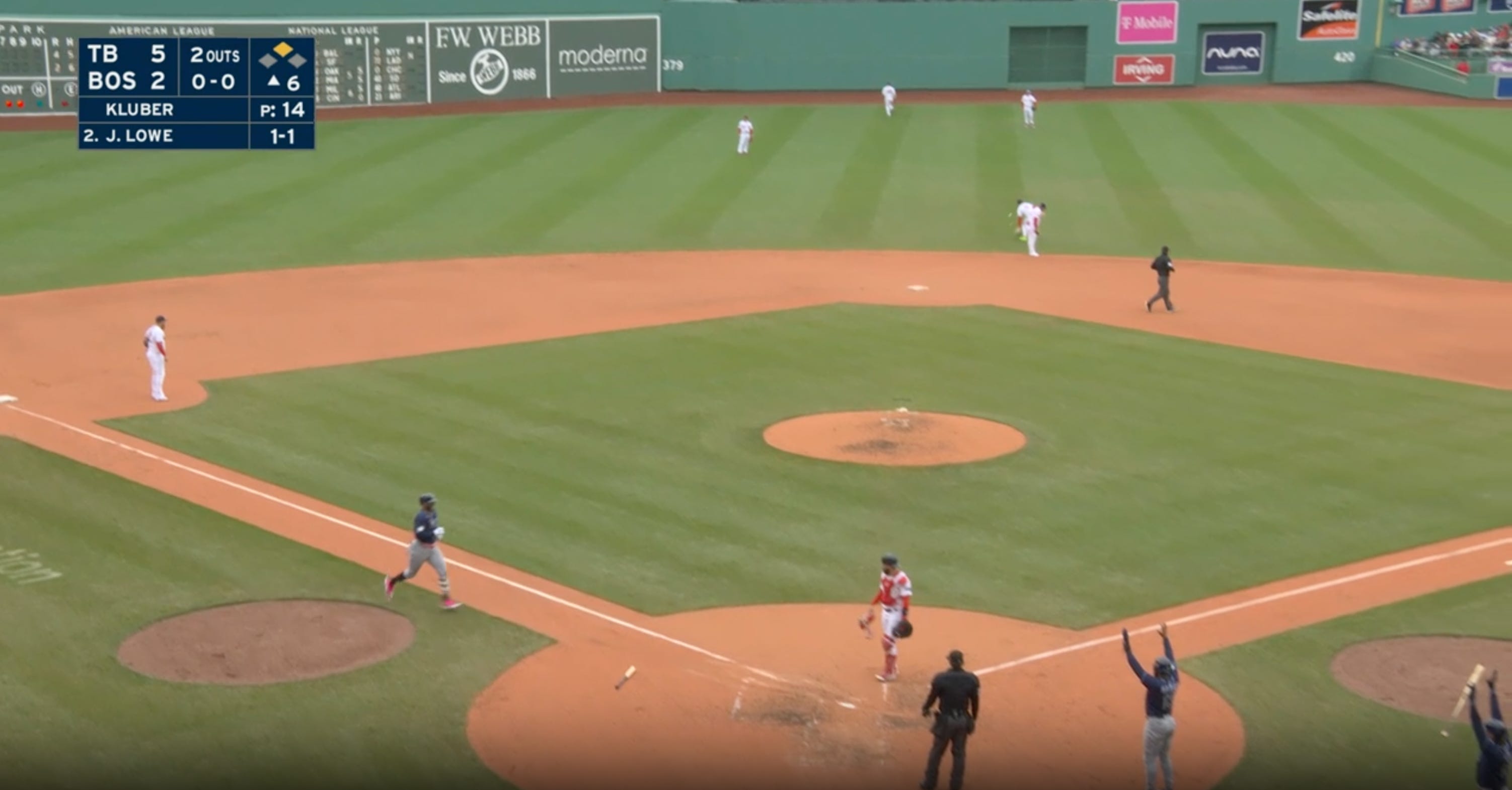
What earns the third star is usually a second change of direction. The most common, most basic form of this is the outfield-infield-outfield (O-I-O) sequence: On a base hit, the outfielder (accurately) throws the ball to the infied; a catcher or cutoff man then redirects the ball to throw out an advancing runner; and that throw is wild. Nobody is ever backing up this throw, so it rolls forever:
As a one-error play, it doesn’t quite capture a sense of cascading failure. But it’s still more satisfying than a Straight-Line play, because the defense actively breaks its own bounds. The ball was completely controlled and then one ambitious fielder said “what if I just huck it as far as I can, would that help?” And there’s a real Little League energy to a discombobulated defense chasing a wild throw—see these guys all standing in the same spot in the outfield, total team confusion:
Four-Star LLHRs:
A four-star play will usually involve at least two of the following features:
batter does nothing good
two ball redirections, or two distinct breakings of the bounds of the defense
multiple errors, or at least multiple mistakes
So the play will usually be an error to start with, or a slow chopper or a swinging bunt single. An infielder will throw the ball wildly into the outfield, and then the outfielder will either throw it wildly back into the infield, or kick it, or let it roll past him, or fail to back it up even though it was his job to. These are team fiascos instead of solitary acts of sabotage.
A bonus factor: At any point, did the ball stop rolling entirely and just sit out there? If defense is the act of controlling the energy a wild ball, and the baseball remains loose even after its energy is entirely spent, that is a rare and satisfying subtype of defensive failure. See:
Five-Star LLHRs:
Generally speaking, a five-star LLHR will criss-cross. There will be at least two and probably three or more redirections, and ideally those redirections will be at different angles, creating something crooked. Not this
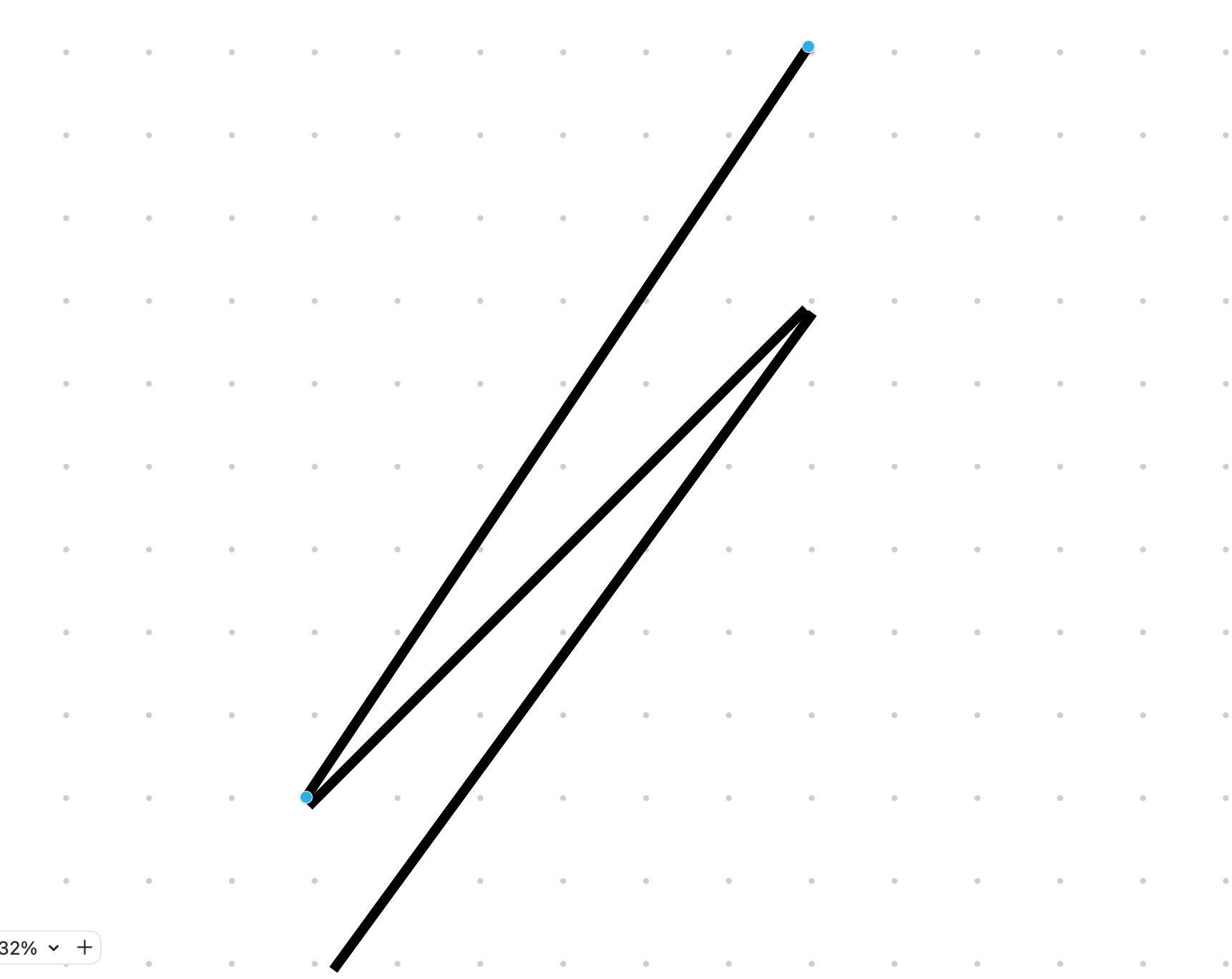
but this
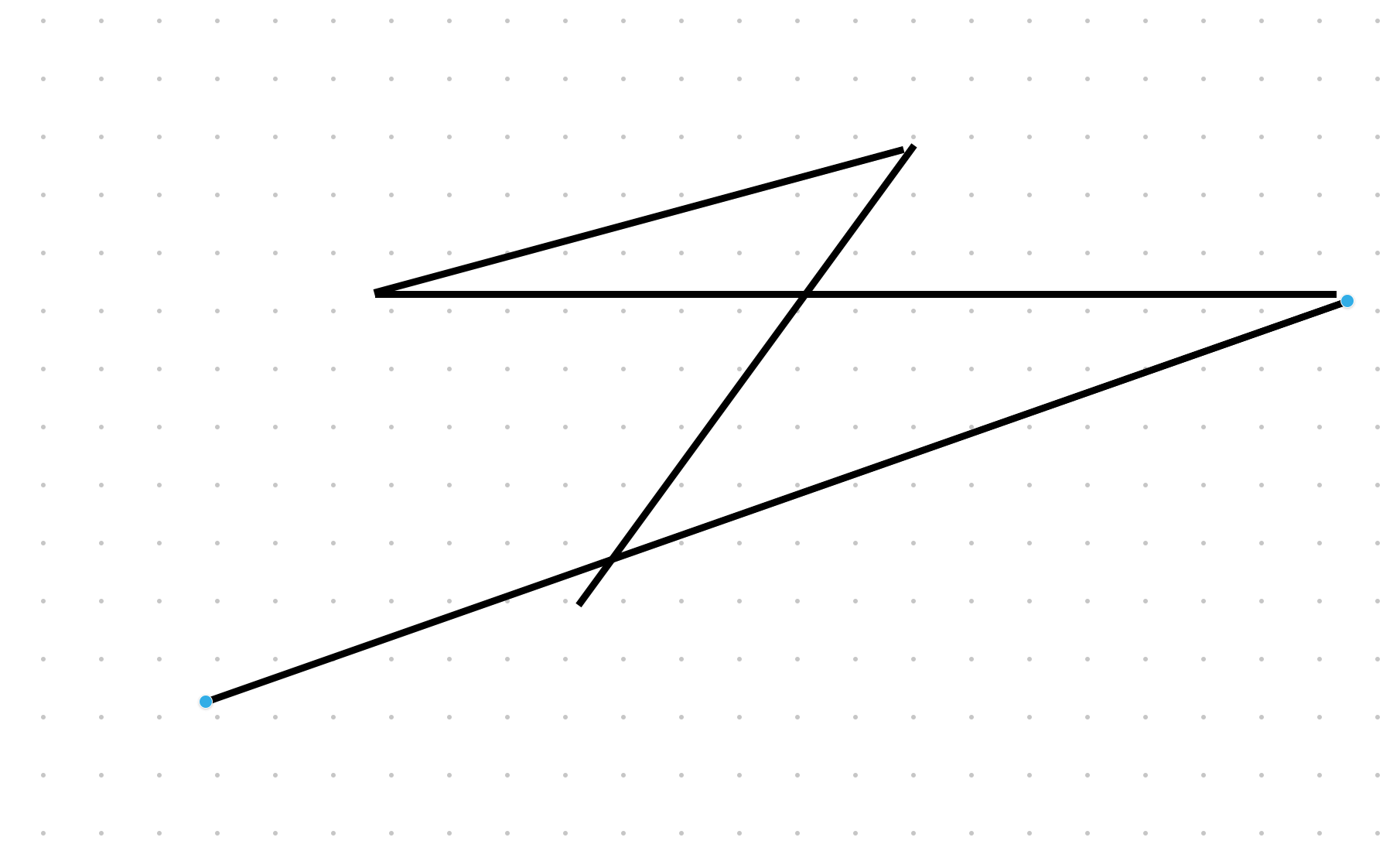
The Heliot Ramos walkoff at the start of this article qualifies as a five-star play. The truly inspired (though probably unintentional) moment in that play was when Ramos, having gone to second base on the throwing error, slowed down, apparently done running. Then, belatedly, he started for third—and it was the belatement that caused the defense to throw it there.
This is important because, once the batter has hit a ball, he can’t do anything else to make it wild. After that, if the ball is to pick up more energy, the defense has to provide it. It was as though Ramos was entrapping the defense. He forced them to make the mistake that would let him score.
**
Since 2016, there have been 128 Little League home runs, if we use my most expansive definition—any non-HR that results in the batter scoring. One was an absolute freak show of a four-base error that involved no sprinting whatsoever and deserves its own daytime talk show:
I’m excluding that one.
Here’s how I’d semi-subjectively score the rest:
One-star plays: 1001
Two-star plays: 10
Three-star plays: 6
Four-star plays: 9
Five-star plays: 2
One of the five-star plays is the Heliot Ramos walk-off that started this piece. The other is my favorite of them all, a play where I count as many as five defenders doing things wrong:
