

I started making baseball GIFs in 2012. Back then, if I’d posted something like this, it would have been a sensation:
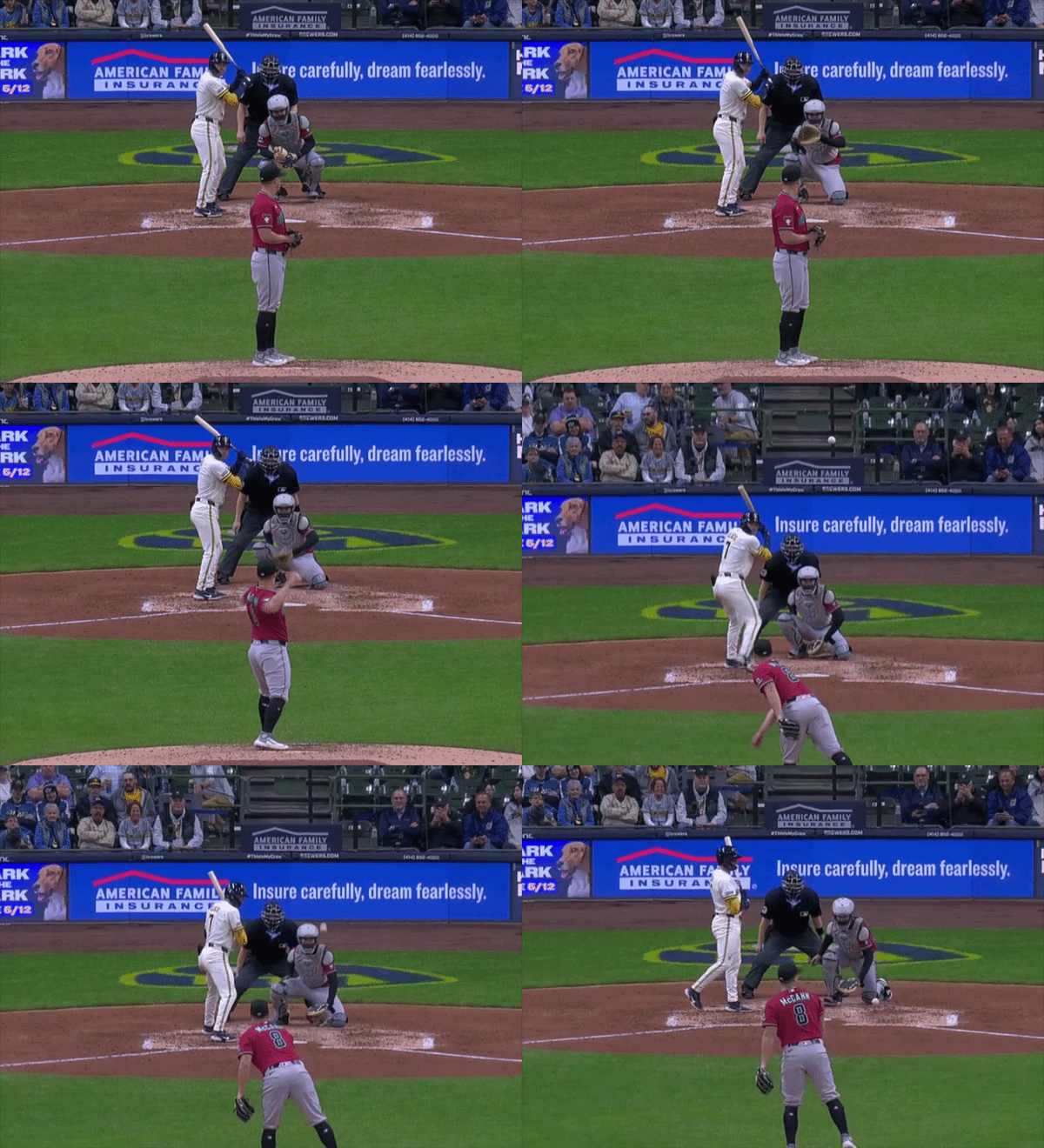
The camera tilting its head up to follow the pitch. The batter’s double leg kick. The catcher blocking it like it’s a ping pong ball tossed back to the server1. The 2012 audience would be confused about what was even happening in this GIF: Is some pitcher bringing back the old-timey eephus? Is it a blooper? A passive-aggressive tantrum? An injury? A miscommunication? An emergency? Did the game’s ceremonial first-pitch thrower arrive too late but demand he get to go on anyway?
Whatever it was, we would have understood it was out of place, that it wasn’t baseball. But now it is. This season there have been almost 1,200 pitches thrown like that—pitches under 55 mph, heaved by position players in blowouts. We’re probably reaching a breaking point, and I’m glad, but a little bit of damage has already been done.
><
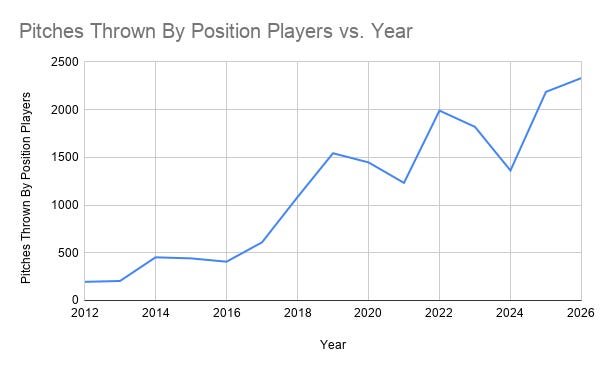
Four bad trendlines in position players pitching:
First is that there’s just obviously a lot more of it, an absurdly high amount given that we thought we reached “peak position players pitching” a long time ago. The league put some mild restraints on the practice before the 2023 season—setting minimum leads and deficits that were required before a non-registered pitcher was allowed in the game—but the larger forces in the game have been stronger than one mild restraint could restrain. Last season blew past the previous record; this season will pass it any day now.
Second is that the lob-it-in-as-slow-as-you-can strategy of position players pitching—which didn’t exist at all a decade ago—is now almost all you see. It depends where you set the line for “as slow as you can,” but, for instance, in 2016, one position player threw one pitch slower than 52 mph. In 2026, more than half of position players’ pitches are slower than that, and the average PPP is now under 55 mph, demonstratively slow.
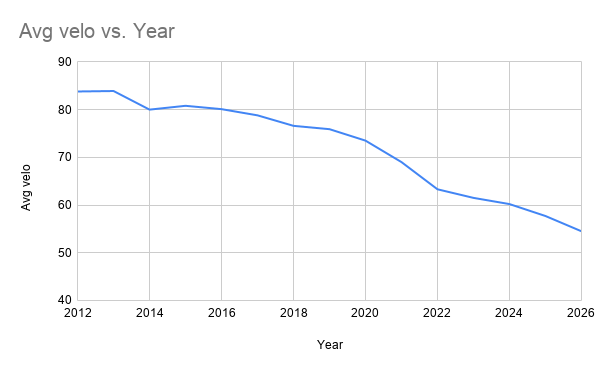
About 15 percent of pitches are in the 30s. About 1 percent are too slow to track, which I’m going to cautiously assume puts them in the 20s.
Third, and most important to me, is that there is no direct strategic benefit for position players throwing like that. One might have reasonably hypothesized that batters would be so disoriented by pitches coming in so slow, so arcing, that they would do worse against 35 mph than they would against 75 mph. (Or, mimicking the pitcher’s disinterest, not even bother to swing.) But this hypothesis has not held up. Batters are destroying their fellow position players, in a way they never did before:
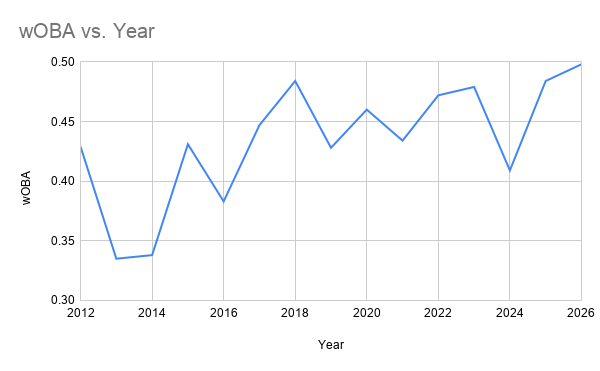
Given the (relatively) small samples involved, that trendline is not as smooth as on the other graphs. But last year’s wOBA against position players was the highest on record, and this year’s has surpassed it. In the 2010s, when position players generally threw between 60 and 90 mph, batters had a combined wOBA of .424. Since 2020, in the lob-and-back-away era of position players pitching, it’s .470, which is roughly Aaron Judge’s best season.
Fourth: The position players throwing these lobs can’t even throw strikes like they used to.
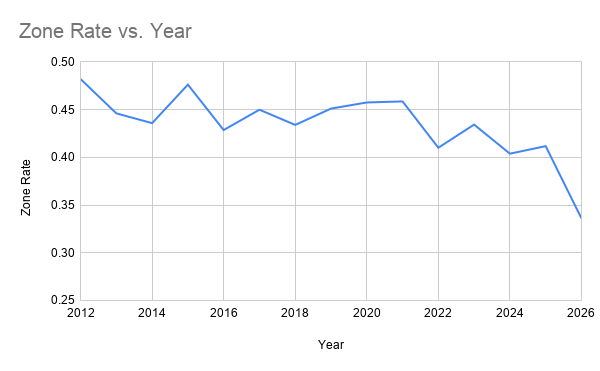
Two-thirds of position players’ pitches this year aren’t even in the strike zone, way below the players’ demonstrated abilities when they were throwing relatively normal.
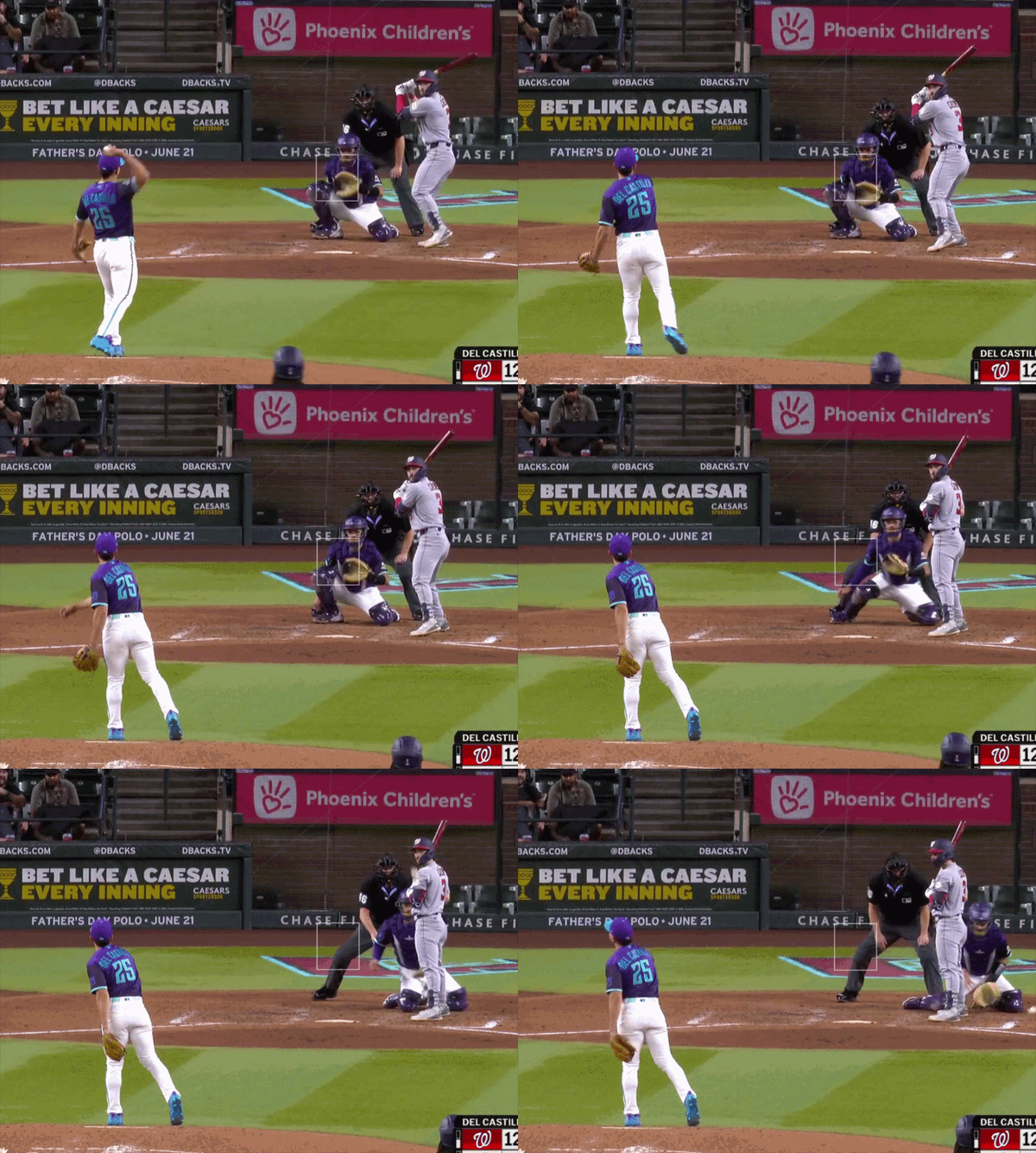
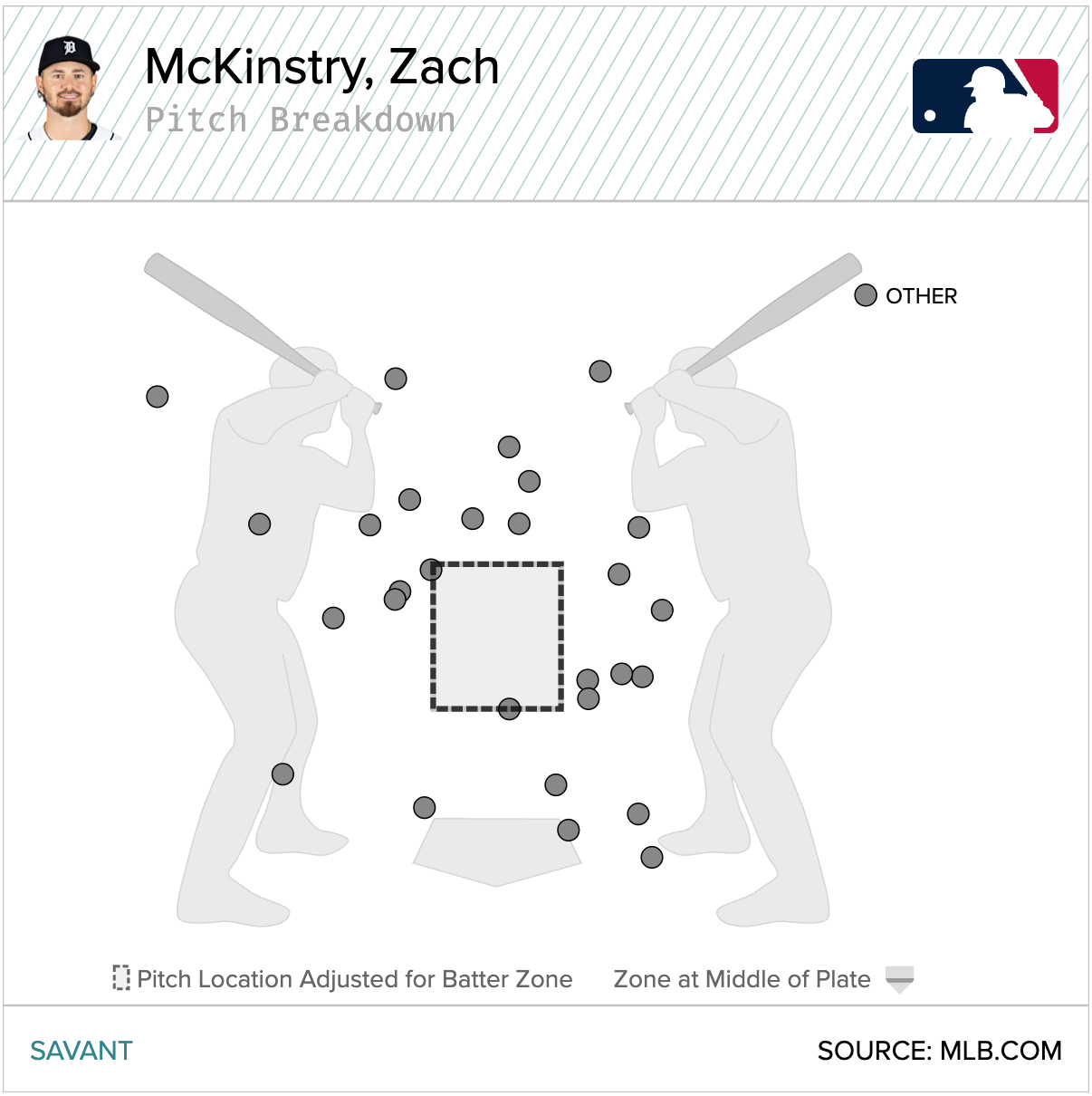
Zach McKinstry came in to pitch the other day. He threw 31 pitches, averaging 40 mph; 27 of the pitches were lobs. Only two of his pitches were in the strike zone. Neither came on a lob; both were pitches he threw with some earnestness, in the 70s. (Hilariously, the umpire blew one call.) The whole package looked like this:
That’s no way to bring a baseball game to conclusion!
><
It’s a bit surprising to me that baseball, which has so many unwritten rules about what players should and shouldn’t do when the game is out of hand, has settled on such a bizarre, asymmetrical surrender when it comes to position players pitching. The pitcher throws the single worst pitch he can. The batter then takes a massive overswing, maybe clocks the opposing catcher with his overbackswing,
