

Day 71 Of The 2025 MLB Season
One of my favorite posts that I wrote in 2024 was about Baseball’s Copa Shot, the reverse-tracking shot that follows a home run hitter down into and across the dugout. (“Copa Shot” because it echoes the Copacabana sequence in “Goodfellas.”) There’ve been handheld cameras on the field since the mid-2000s, but I love how camera operators have recently changed their positioning: Instead of just staying on the edges of the field and shooting inward, they’re now going onto the field and shooting outward. It’s super immersive.
The handheld stuff continues to expand. This year, most local broadcasts have a handheld camera (or multiple), and their operators are poking around the field, trying to find a) more interesting angles and b) the limits on how close they can get.
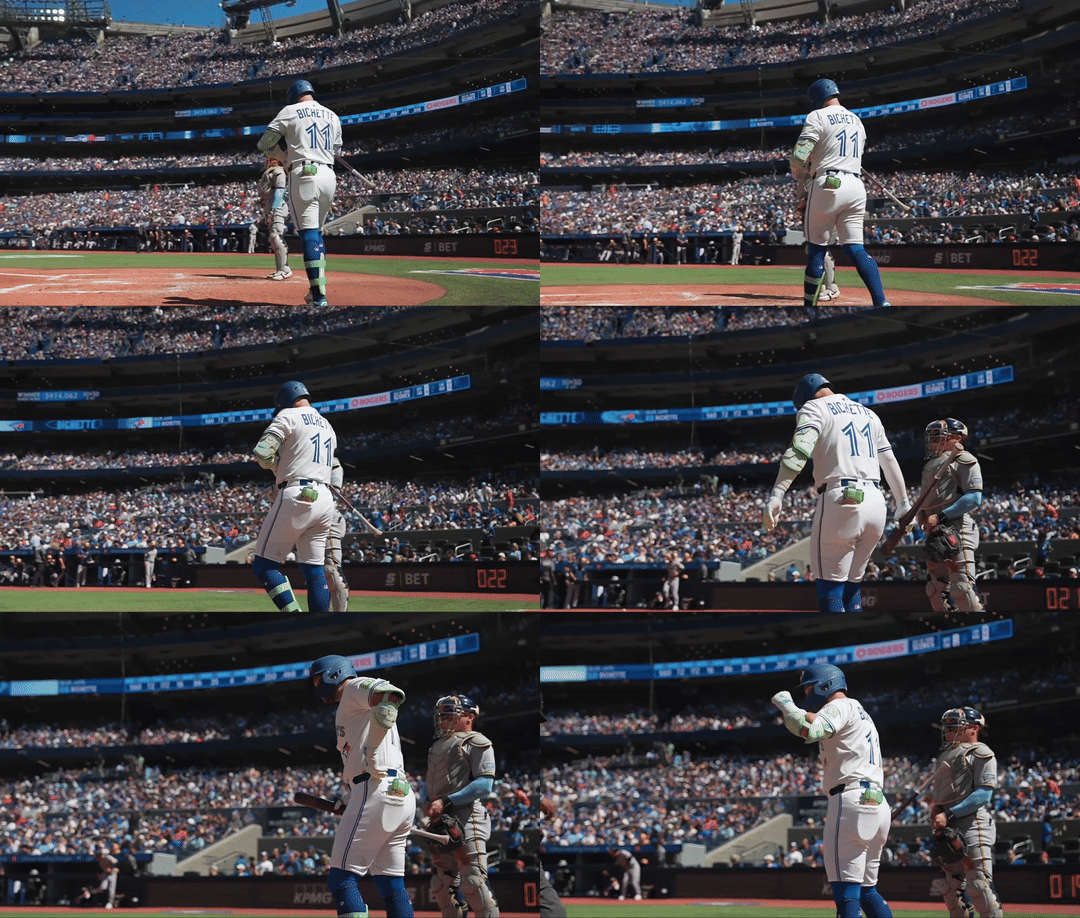
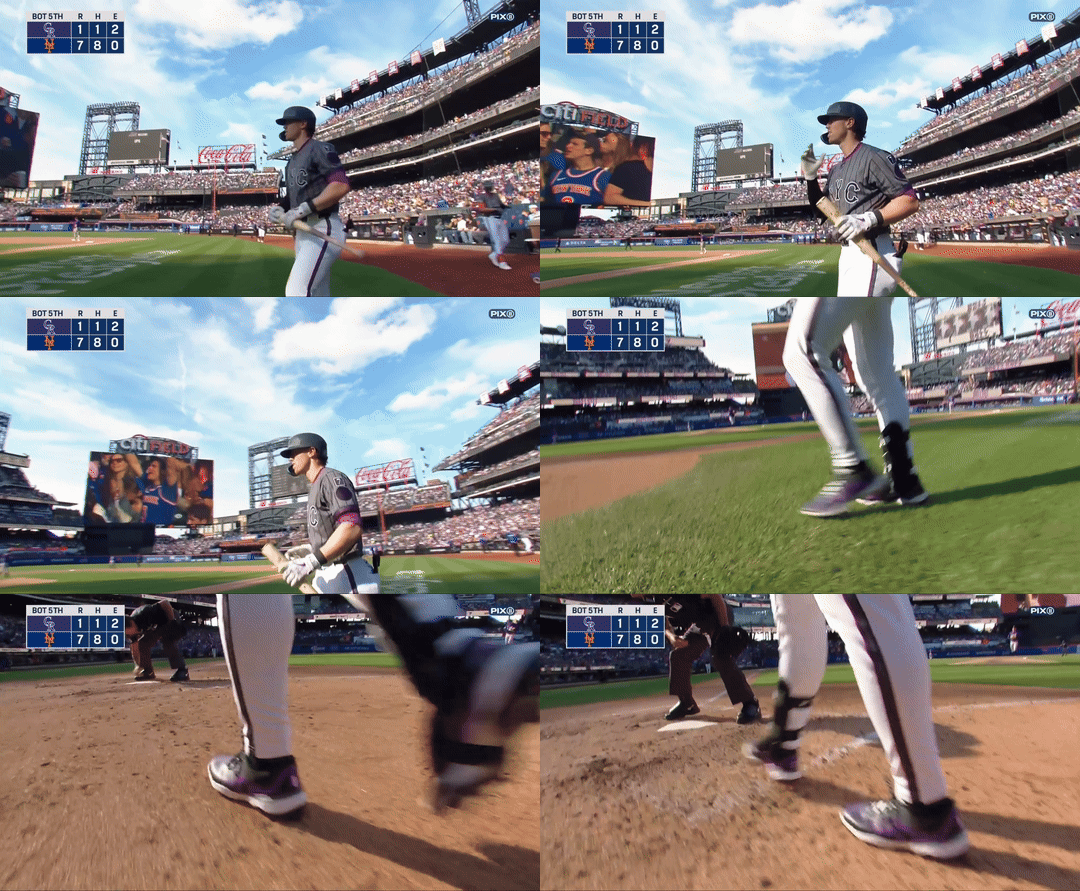
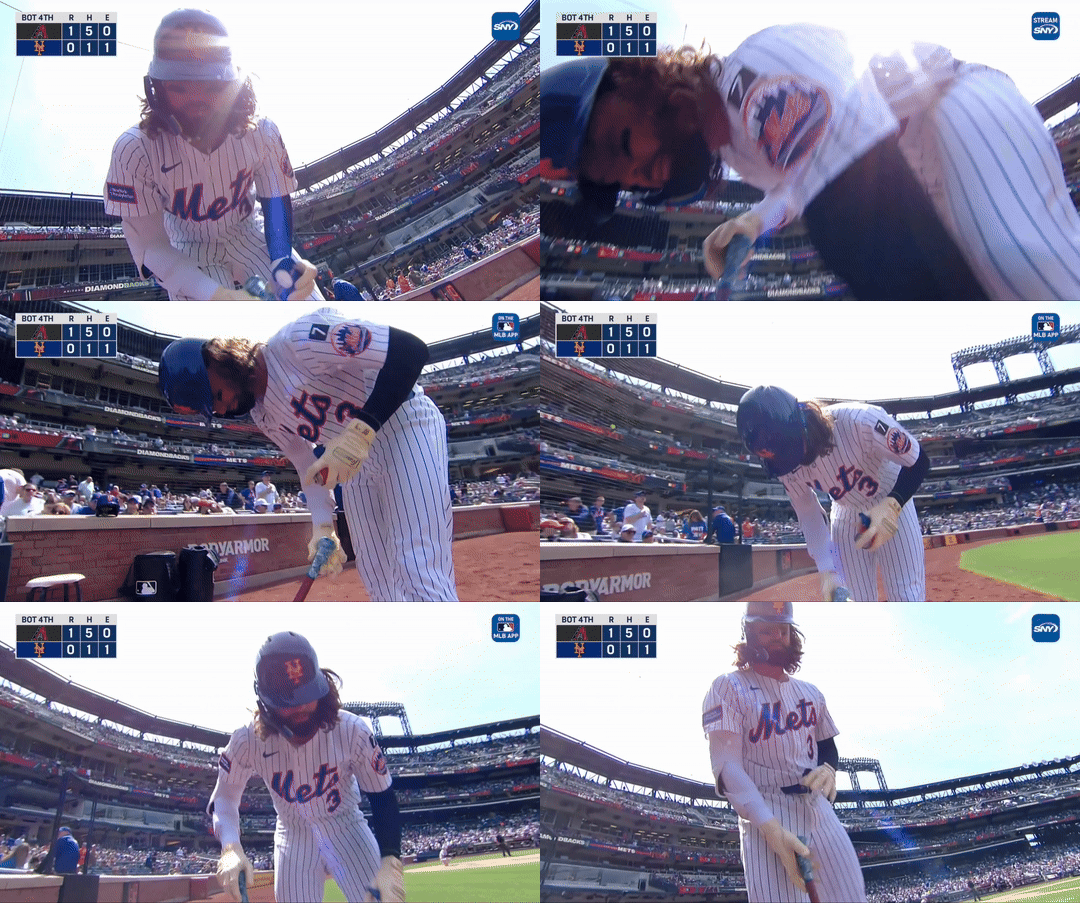
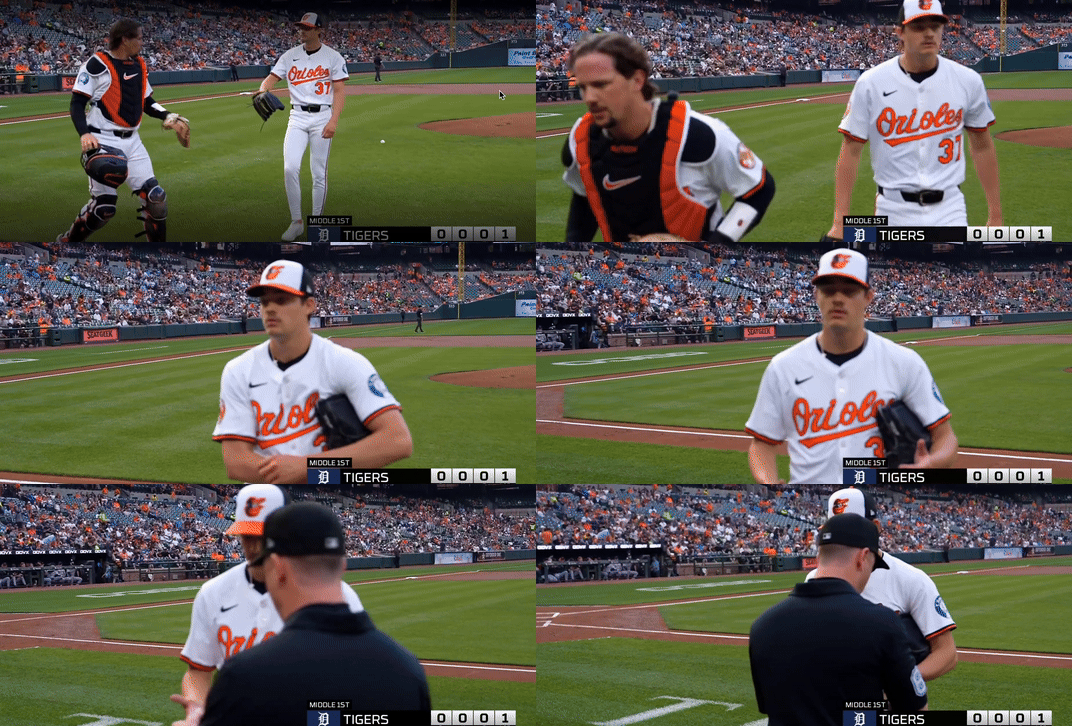
Cool stuff! But from the other side of the camera, probably somewhat awkward stuff! There’s a guy on the field trying to get as close to you as possible without ever making eye contact. He’s the only person wearing shorts instead of full uniform, and he’s lugging advanced technology into this pastoral realm where everything else is leather and horsehide and hardwood. There are probably a lot of “oh, you’re here, too” moments.
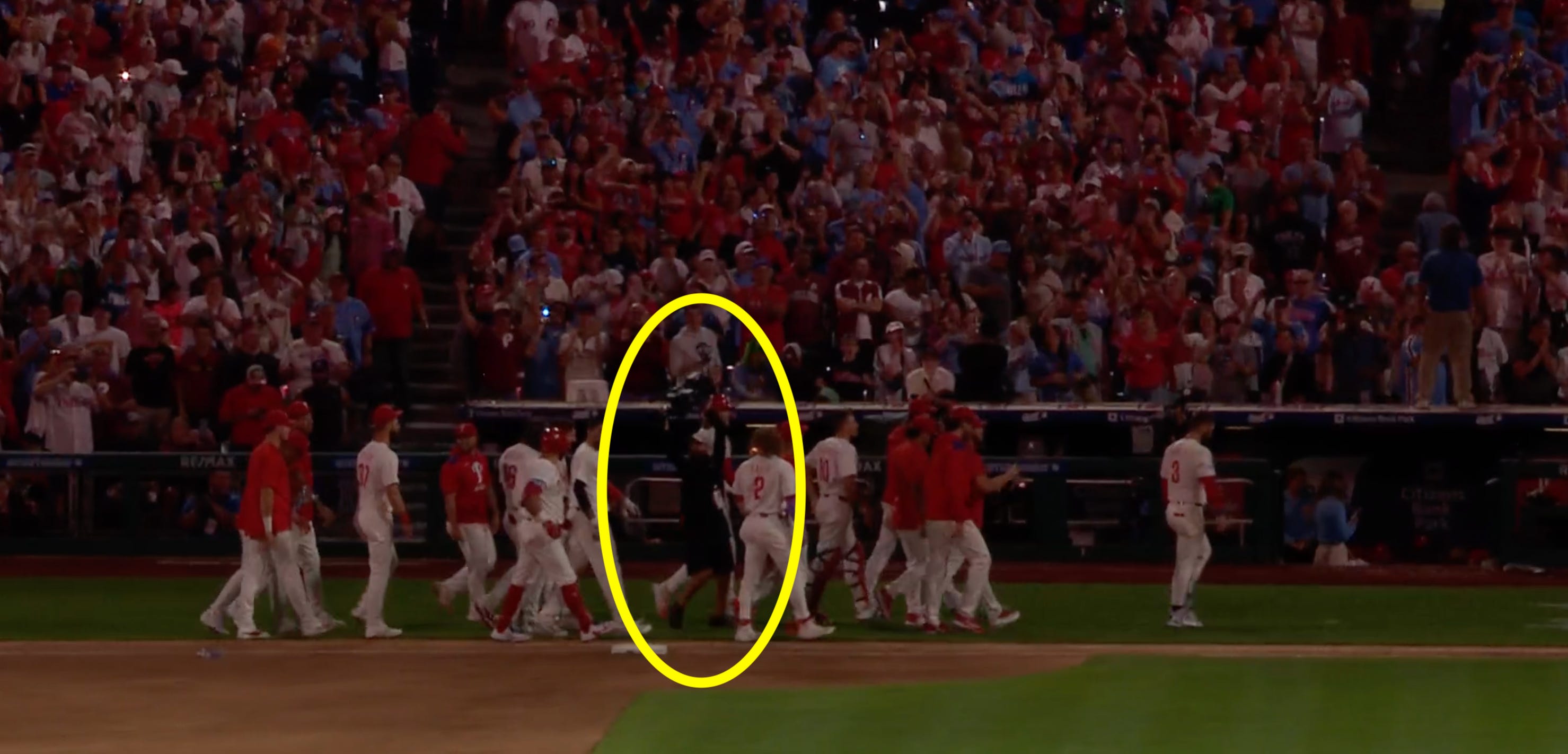
So it’s a negotiation between everybody involved. And, as far as I can tell, there is one stakeholder group that is skeptical of these shots: The umpires, or at least some of them.
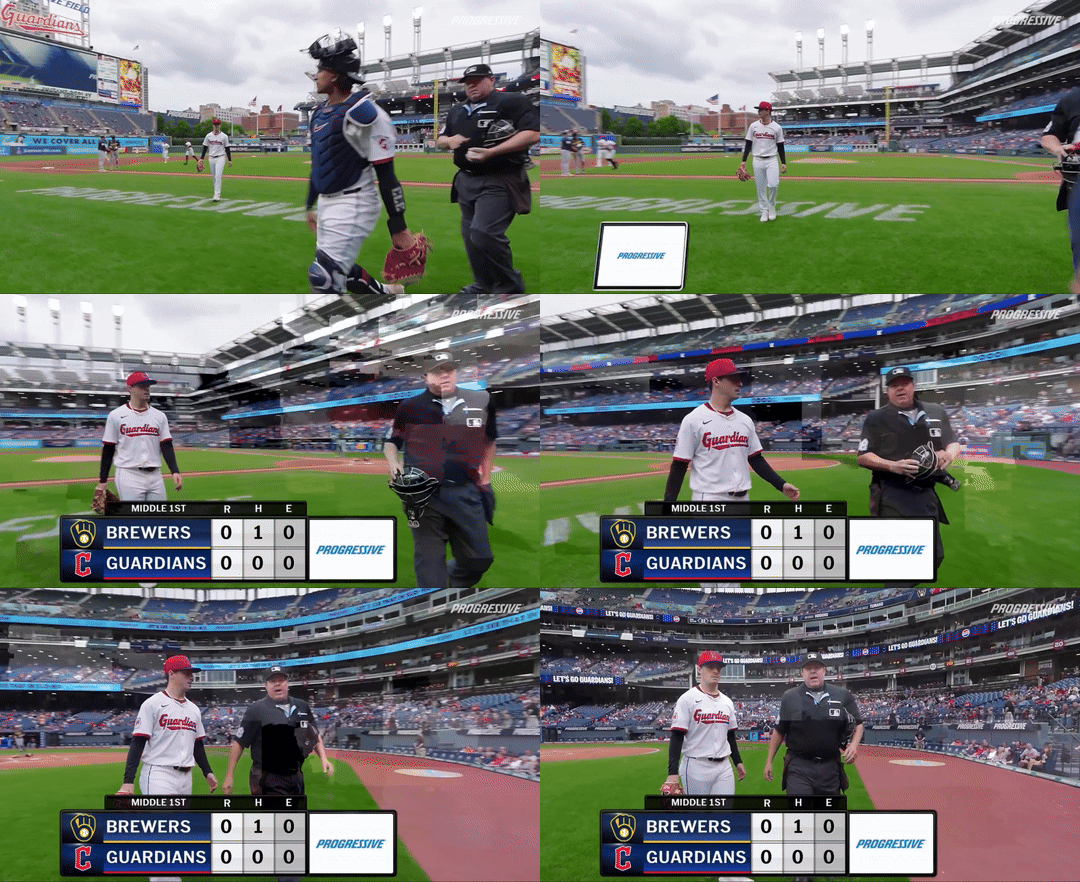
I have two videos here that I saved in my files as “Ump Huh” and, from Day 71 of the season, “Ump Weird”. In Ump Huh, the umpire seems to be scolding the handheld:
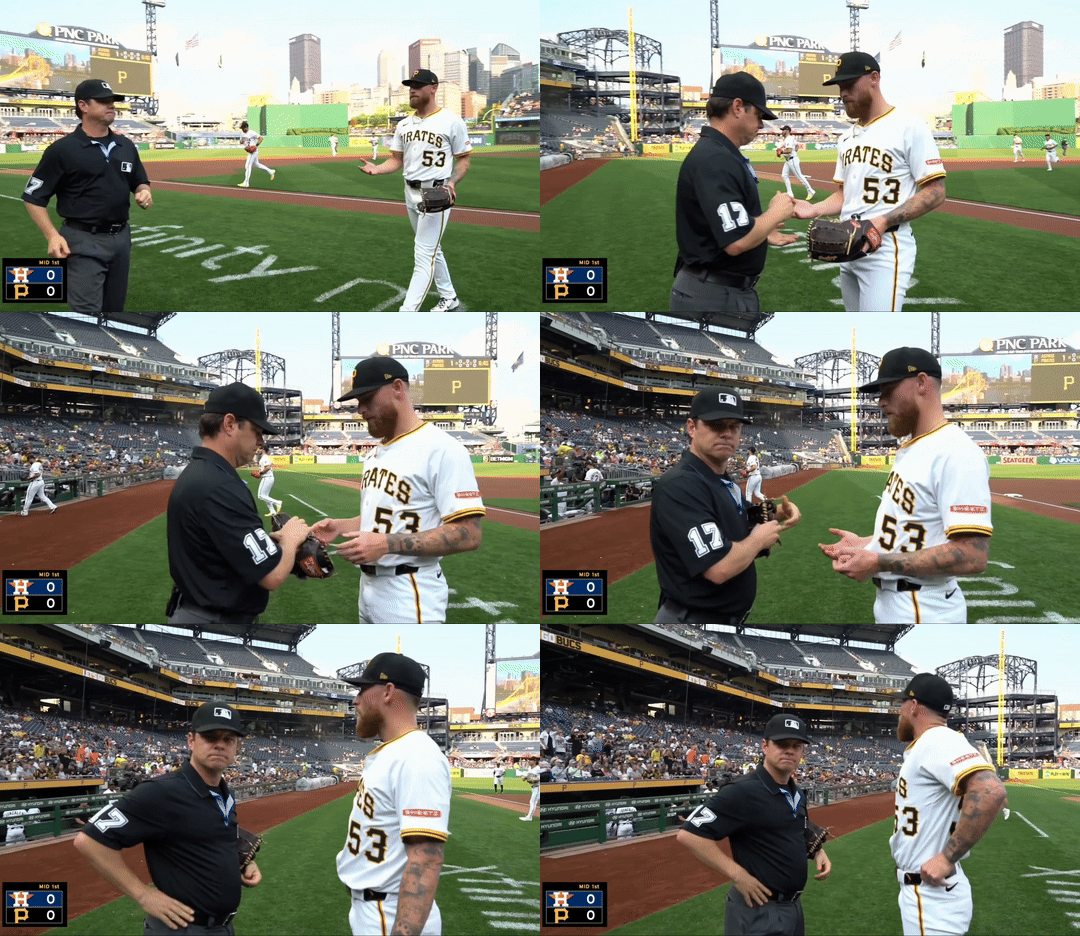
And in Ump Weird, the umpire seems to be passive-aggressively waiting out the handheld:
We can hypothesize that the ballspace has its hierarchy of inhabitants. The umpires have been there a long time; their names are in the box score, they have special clothes that can’t be bought at the mall, they can make announcements on the PA system, etc. They LIVE HERE. The camera operators, meanwhile, are in some sense involved in the exact same project—making a living, doing their job—but they are, to this point, probationary visitors with day passes hanging around their necks. As the operators try to figure out how close they can get to the field, keep your eye out for this tension.
*
*
*
Day 72 Of The 2025 MLB Season
Mason Miller has thrown the only major league pitches this season that were over 104 mph. He also threw maybe the year’s softest throw from the mound?
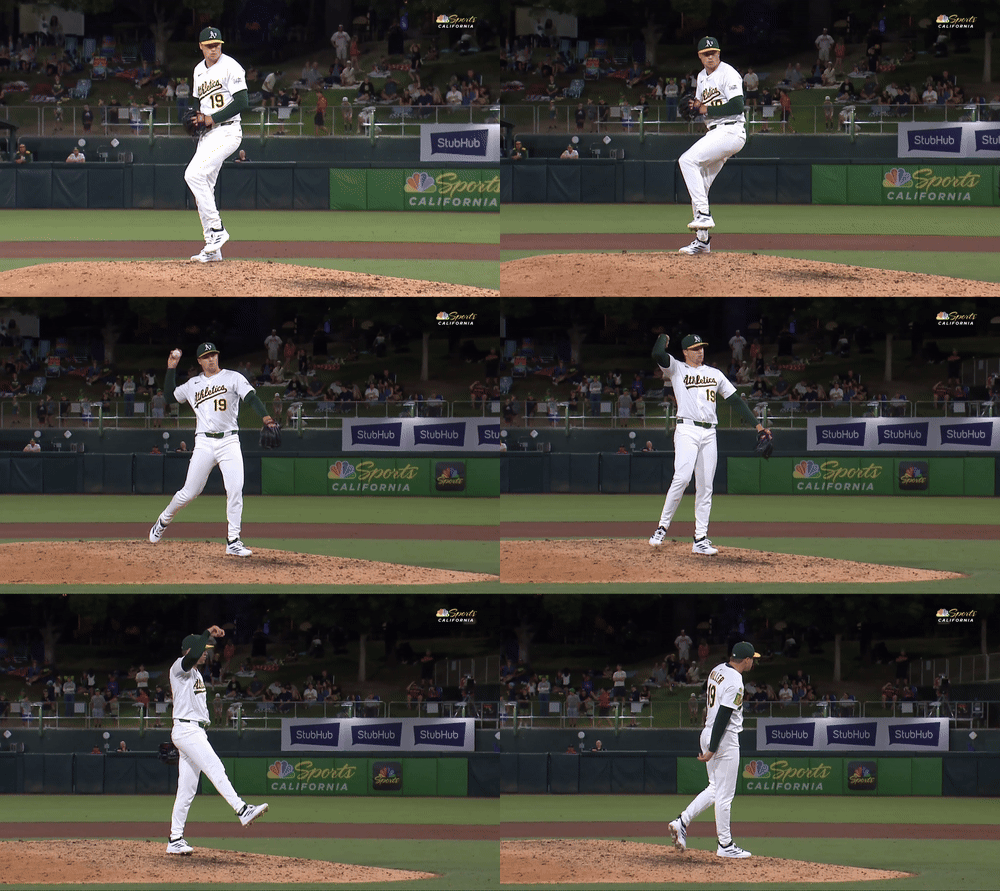
That throw didn’t count for anything—it came after a late timeout, granted to the hitter by the home plate umpire after Miller had already started his motion in the ninth inning of Day 72. Miller anticipated it: He was basically waiting to be ambushed with this late timeout, and his toss away looks like it has a little snark to it.
Timeouts. Anytime you restrict some element in a game, there’s a good chance you’ll end up gamifying that element, even if it wasn’t the original intent. When MLB imposed a one-timeout limit on each plate appearance prior to the 2023 season, it was to speed the game, but the batters immediately started to develop Timeout Management Theory, most commonly expressed as:
1. Preserve the timeout until late into an at-bat.
2. Almost automatically use it as soon as the count reaches two strikes.1
Those are the simple applications of timeout strategy. More advanced strategy, which is less common but occurs a time or three per game, is using the timeout to cheese off the pitcher. The way it works is,
Part 1: Hitter, aware of when in the pitch clock the pitcher tends to throw, requests time out juuuuust as the pitcher starts to rock into motion. You’ve seen versions of the disruptive timeout as long as you’ve been watching baseball, but I don’t think you’ve ever seen hitters so frequently and so nakedly try to time their requests to the moment the pitcher has started to throw:
