
Fright Eyes
Even umpires must flinch.

Day 116 Of The 2025 MLB Season
On July 20, Christian Walker took a pitch up and in. He thought it nicked him on the elbow. The home plate umpire thought it didn’t. At the moment in question:
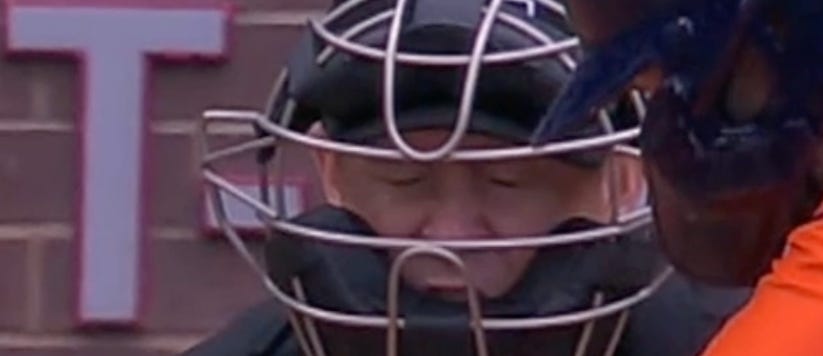
There’s something called the Startle Response, a “largely unconscious defensive response to sudden or threatening stimuli… a brainstem reflectory reaction that serves to protect vulnerable parts, such as the eyes (eyeblink).” AKA a flinch.
There’s also startle response habituation. The reflex decreases upon repeated exposure to the supposed threat. Surprisingly, though, humans don’t seem to get habituated to extremely fast pitches that might get foul-tipped into their face—or, if they do, there is a limit to that habituation. When you start focusing on the catchers in slow-motion zoomed-in replays of home run swings and passed balls, you see that they are closing their eyes constantly. Not just the inexperienced catchers or the bad catchers, either. Here’s my favorite player, Buster Posey,
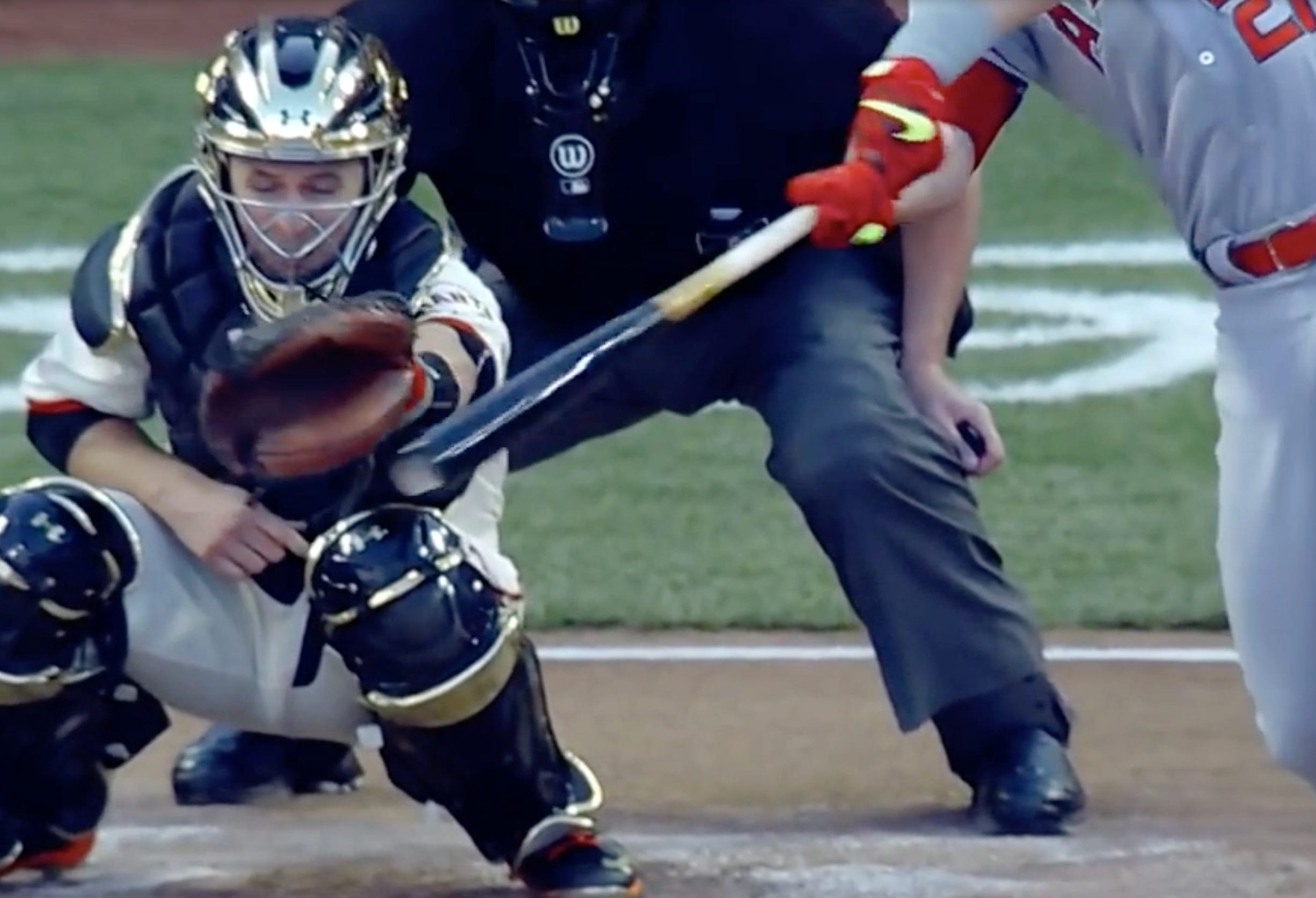
and if he does it then I’ll give anybody else a pass.
Now, there’s probably some habituation going on. There are different levels of startle response among catchers.
Beginner level: Closes eyes on takes
Intermediate level: Closes eyes on swings
Advanced level: Closes eyes on contact
Emergency Catcher level: Hides under a blanket
We don’t get to see the umpires’ eyes nearly as often—the zoomed replay often crops them out, and their deeper masks and downturned positioning create darker shadows around the eyes—but it’s a plausible assumption that, if Buster Posey was flinching, then Bill Klem and Jocko Conlan were, too.
On the other hand, we hold umpires to a different standard than catchers. So long as a catcher catches the ball, nobody can complain about his technique—the proof is in the padding. But umpires don’t just have to be right with their calls; they have to avoid even the appearance of uncertainty. Umpires are instructed, by the umpire manual, to project confidence and authority, and managers and players are always looking for ways to chip away at their certainty. Fair or not, you’d feel less confidence in an umpire whose eyes were closed, even for just a split second, even on calls that also produce auditory clues. (And even if, in umpire school, umping with one’s eyes closed is a common drill!)
Nevertheless, it does happen, as in the case of the Christian Walker hit-by-pitch.
