
Standing Occasion
When do *you* get to your feet at a ballgame?

Day 38 Of The 2025 MLB Season
There was a quiet moment on April 8—Day 12 of the 2025 MLB Season—when the Tigers were playing out the tail innings of a 5-0 victory. Riley Greene was batting with two outs and a runner on first in the seventh inning, and a member of the Tigers’ Energy Squad raised a large sign that said:
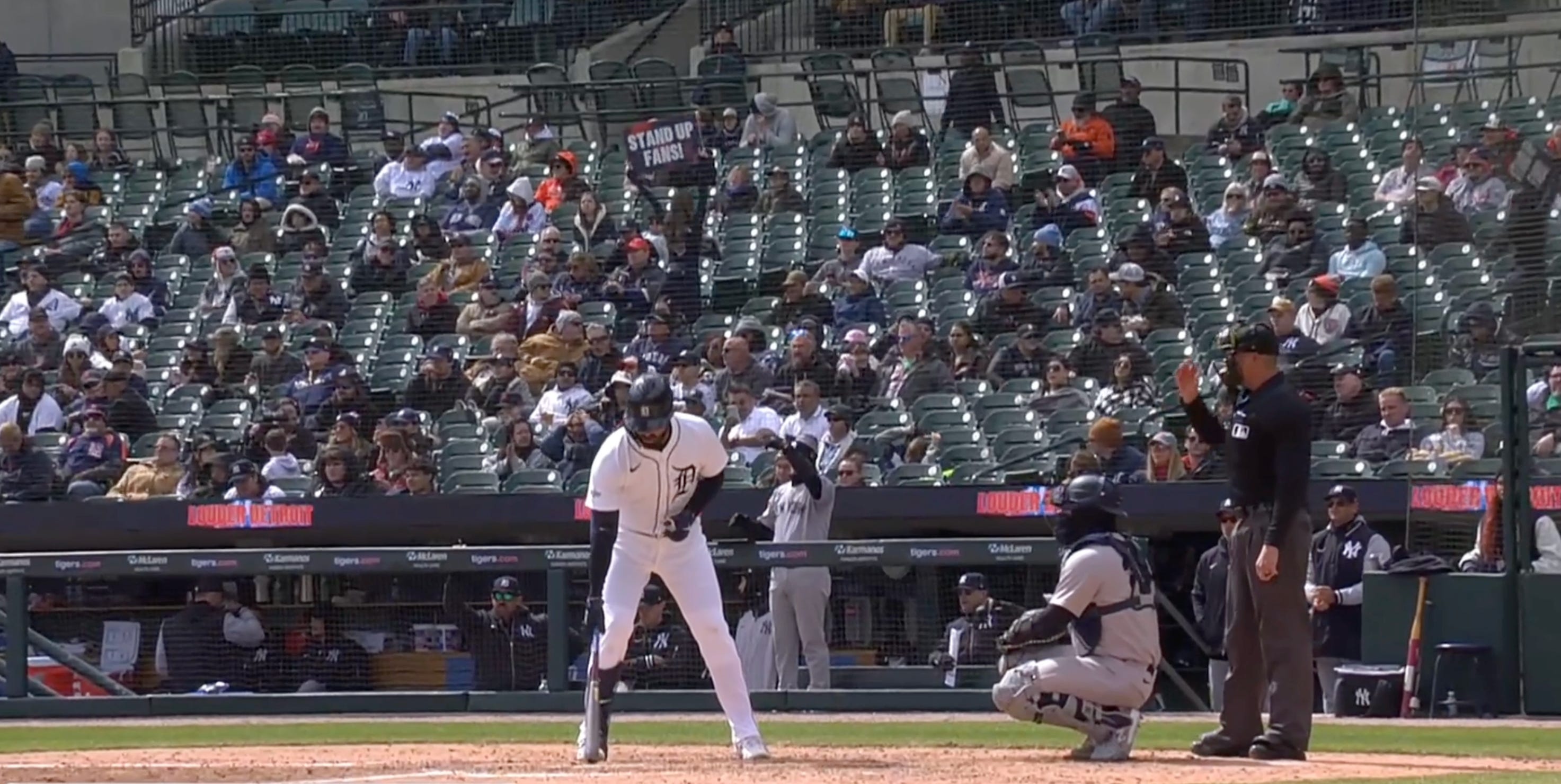
STAND UP FANS!
The FANS did not STAND UP, and I doubt this surprises you: It was a five-run game, nothing important was imminent, take it easy.
A lot of our actions are calibrated to social expectations: We learn through experience how long to hold a handshake, in which situations it’s permissible to haggle over price, how loudly to speak into a cell phone on a subway platform, and when to stand up at a ball game. You probably have absorbed an intuitive sense of these things.
Would you stand up if your team is batting ahead by five in the seventh inning? No. Would you stand up if your team is batting in the following situations, all of which actually happened on May 3, the 38th Day Of The 2025 MLB Season?
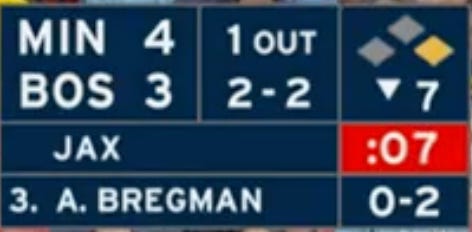
1. Bottom of the seventh inning, down by one run, runner on first base, one out, Alex Bregman up with two strikes?
2. Bottom of the ninth inning, down by one run, bases are loaded, two outs, first pitch to Kyle Stowers?

3. Bottom of the sixth, down by one run, bases loaded, Matt Chapman up with one out?

4. Bottom of the eighth, down by one run, runners on first and third, two outs, Aaron Judge hitting and ahead in the count?

5. Bottom of the ninth inning, down by one run, tying run is on second base with two outs and two strikes on Adolis García?

I don’t know your answers. Mine would be:
Don’t stand
Stand, jump around, etc.
Consider standing only after there are two outs
Stand
Stand
If you said stand for any of these, you’re wrong. We’re all wrong. In 2025 ball, nobody stands!
*
That overstates things a little. Fans will stand to support their pitcher in certain circumstances (final out of a game, presumed final strike in a pitcher’s great start). But in the five situations above, there were 300 visible fans, of whom I could count five standing. Granted, I put in two of those situations just to balance your options, but in the three huge-leverage situations—one involving the greatest right-handed hitter in history, one the literal highest-leverage situation in all of baseball this year—there were five standers out of 150 fans. (All five were standing for Judge.)
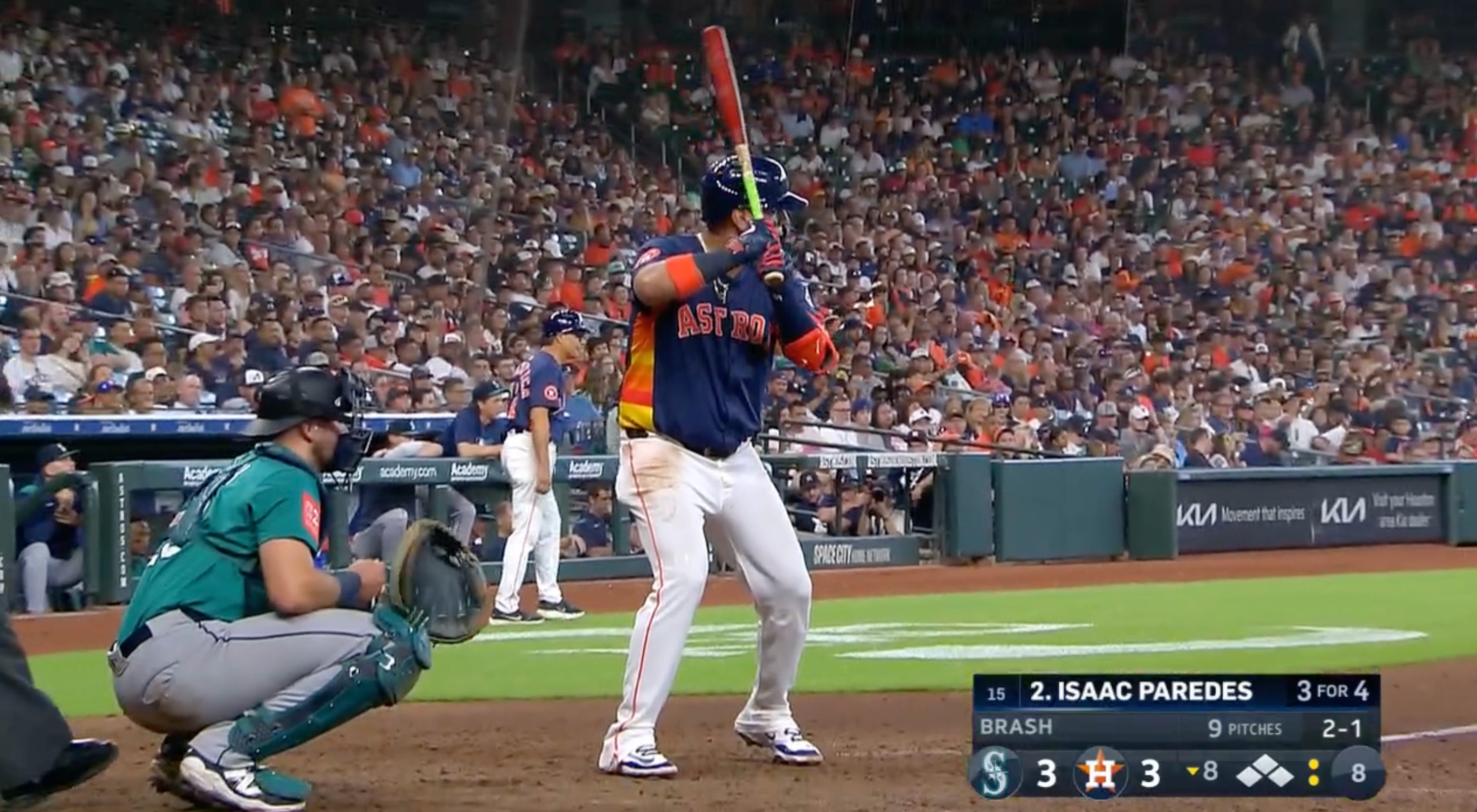
This stunned me, since I have sensory memories of standing up quite often as a kid watching ball. So I went to find the highest-leverage plate appearance by each team at home this season (on offense only). Here’s our league:
Angels: Nobody was standing for the highest-leverage plate appearance of their season
A’s: ~30 percent standing
Astros: Nobody
Blue Jays: Nobody
Braves: Nobody
Brewers: Nobody
Cardinals: ~70 percent standing
Cubs: Every person was standing!
Dodgers: ~20 percent standing
Nationals: Nobody
Giants: ~40 percent standing
Guardians: Nobody
Mariners: ~50 percent standing
Mets: Every person was standing!
Orioles: One person was standing
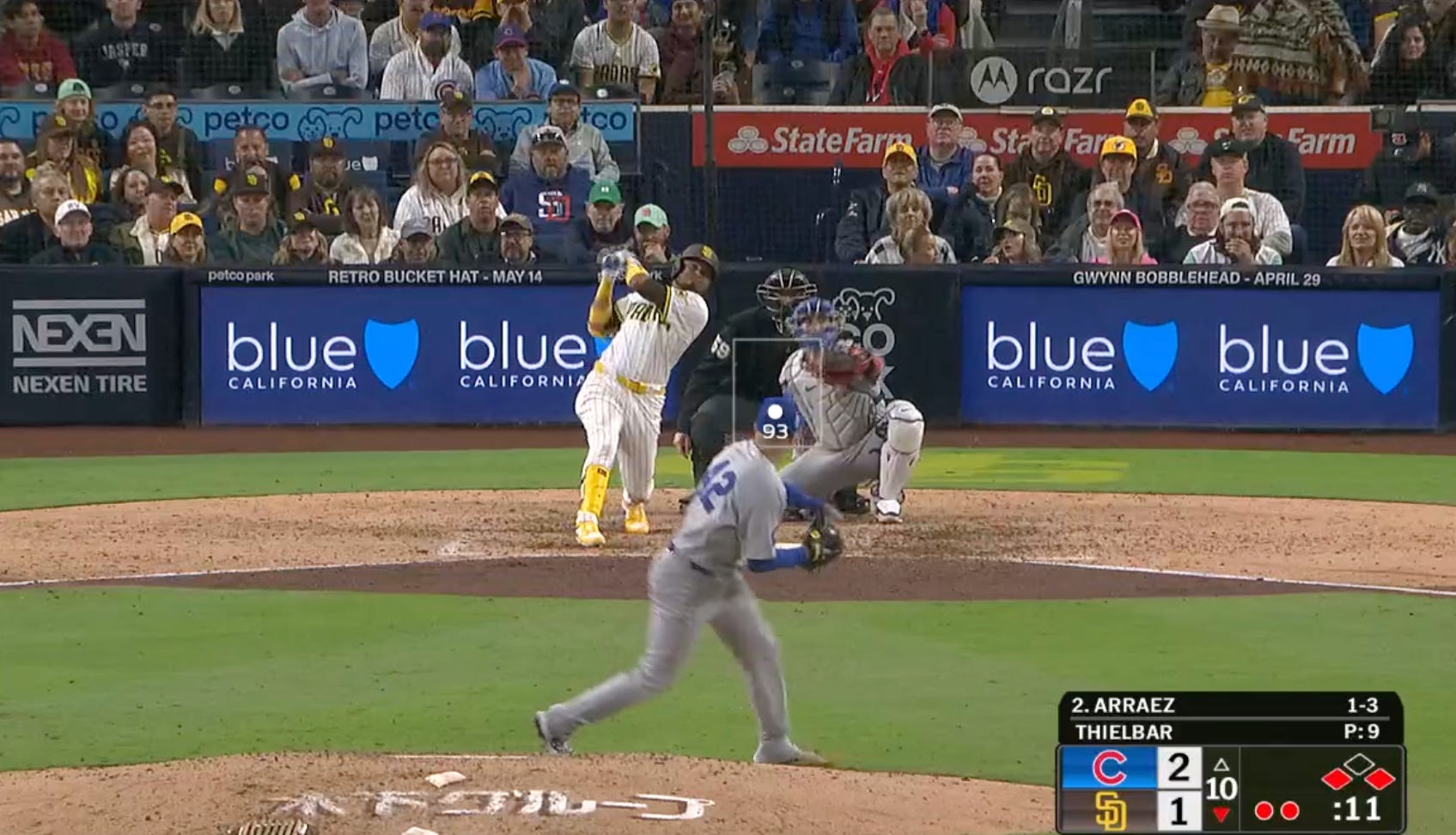
Padres: One person (in a beautiful poncho) was standing
Phillies: Nobody
Pirates: Nobody
Rangers: Nobody
Reds: Nobody
Red Sox: Every person was standing!
Royals: ~90 percent standing
Tigers: Nobody standing; two people still contemplating buying snacks
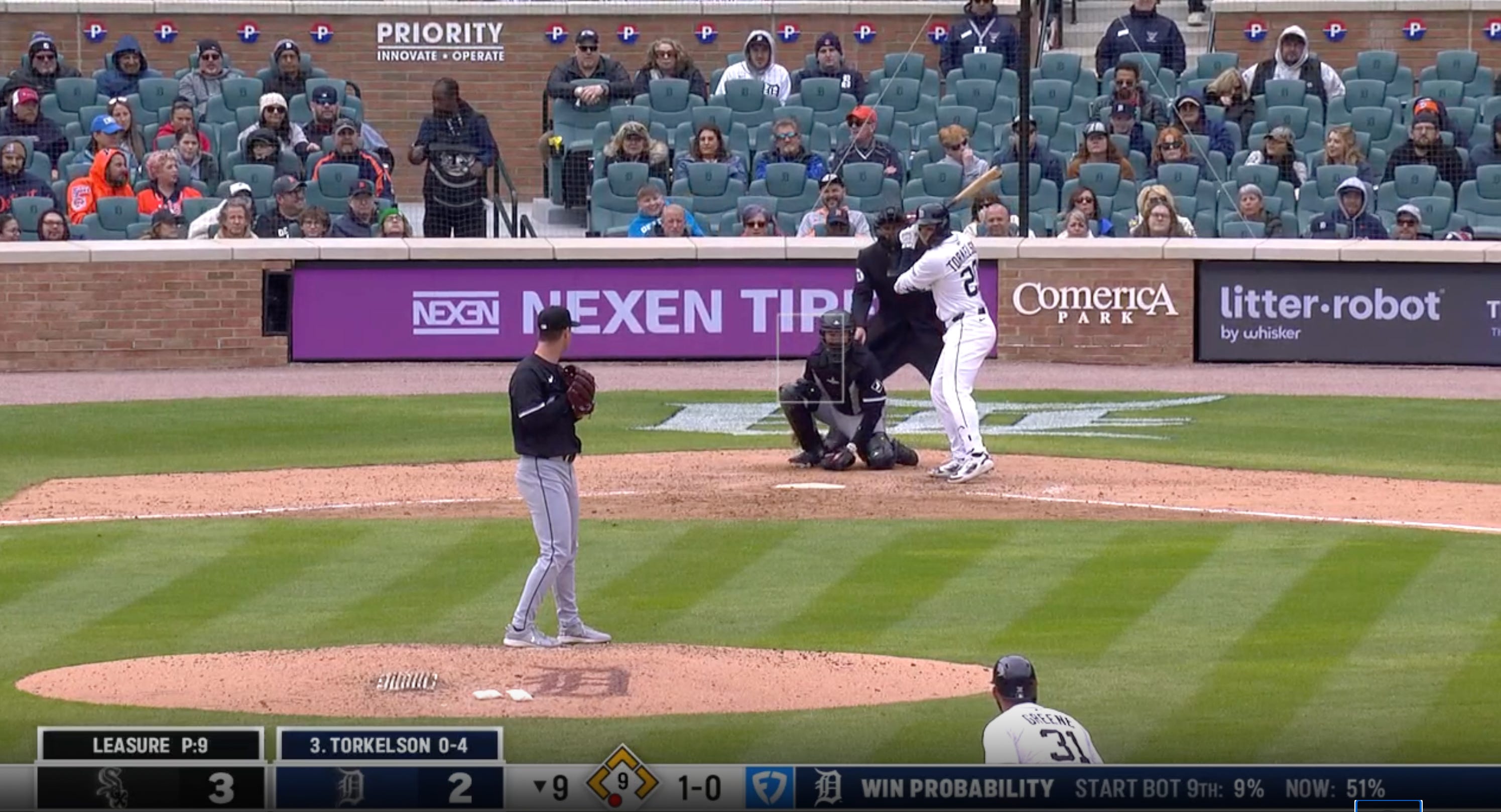
Twins: ~20 percent standing
White Sox: Nobody
Yankees: Nobody
Marlins: Nobody
Rockies: Nobody
Rays: Nobody
Diamondbacks: Nobody
(Here are links to the videos of each, if you’re at all interested in sampling the stakes and broadcast moods of each situation.)
So 30 fanbases representing 30 regions in 30 comparably extreme-leverage situations, the most exciting moments baseball has produced this year. In two-thirds of cases, not one human being stood up. On average, 20 percent did, though that’s a misleading average, since it was usually (almost) all or (almost) nothing.
**
There’s a reason the Tigers have an Energy Squad at their games: For a big-crowd sport, energy is both part of the draw and part of the signal. If you leave a major gathering unenergized, you probably won’t remember it very well, and if nobody ever stands it reinforces the message that all that stuff is boring.
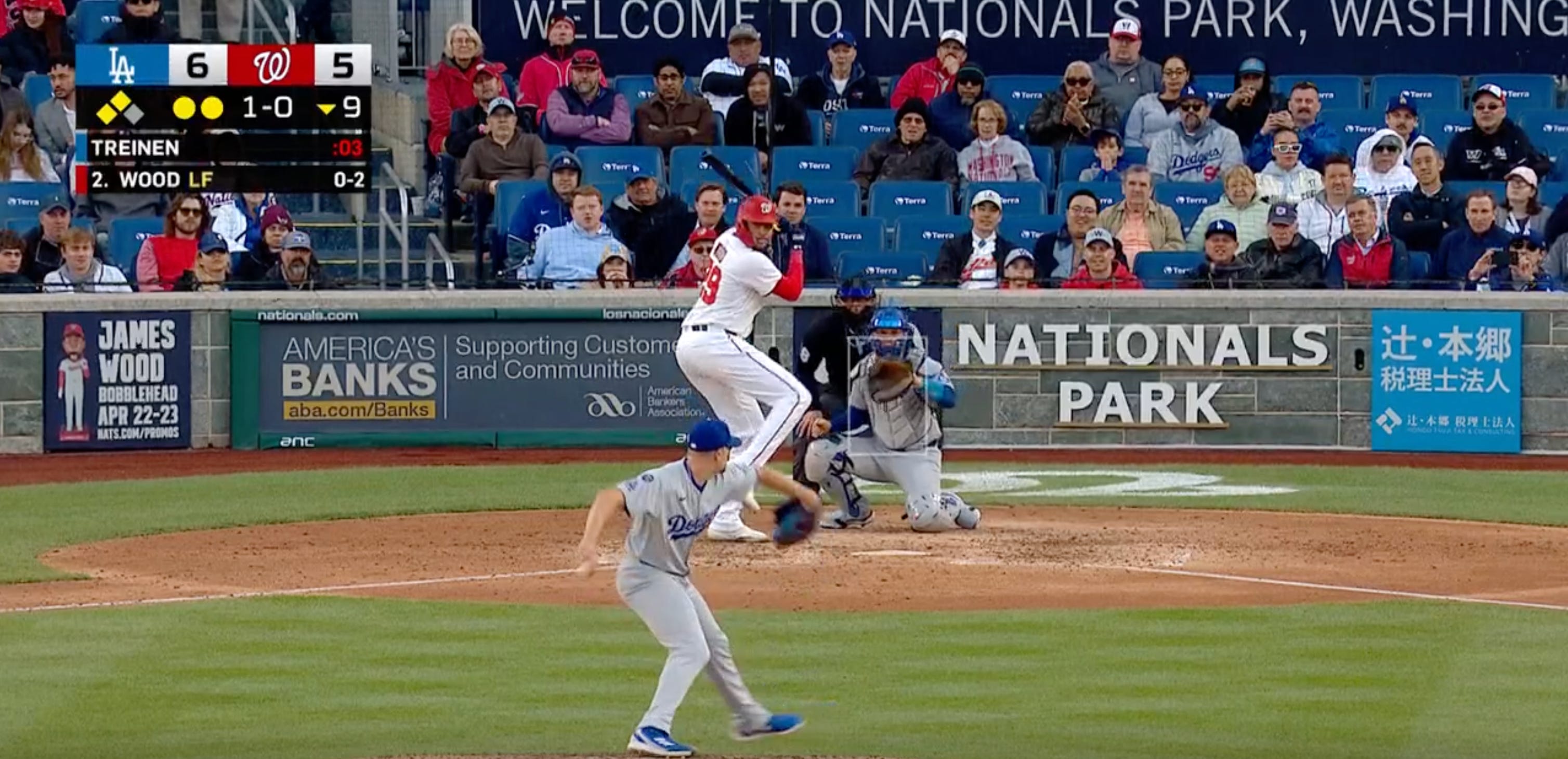
So it worried me that baseball has gotten this sitterish. It felt like a crushingly negative indicator that nobody in Washington stands for James Wood—the best baseball story in that city in a half-decade!—with two outs and two in scoring position and trailing by one run against the Los Angeles Dodgers in the ninth inning.
Exploring this question in a variety of contexts in the past few days, I came to three realizations:
1. Standing wasn’t actually as common in the past as my memory tells me. I checked in on about a dozen games from the 1990s, and standing was, yes, somewhat more common. But there were certainly Stand Up situations when nobody stood up. “I can’t believe how quiet this crowd is,” Jon Miller observed in one 1997 game, with the tying and go-ahead runs on base in the bottom of the 10th.
You could take this one of two ways: Sitting down has been going on for a long time, which suggests this is no big deal, that I’m just falling for distorted nostalgia. On the other hand, 30 years later, it’s the standing up that I remember about going to ball games—which suggests that the standing up is what makes something a meaningful, memorable experience.
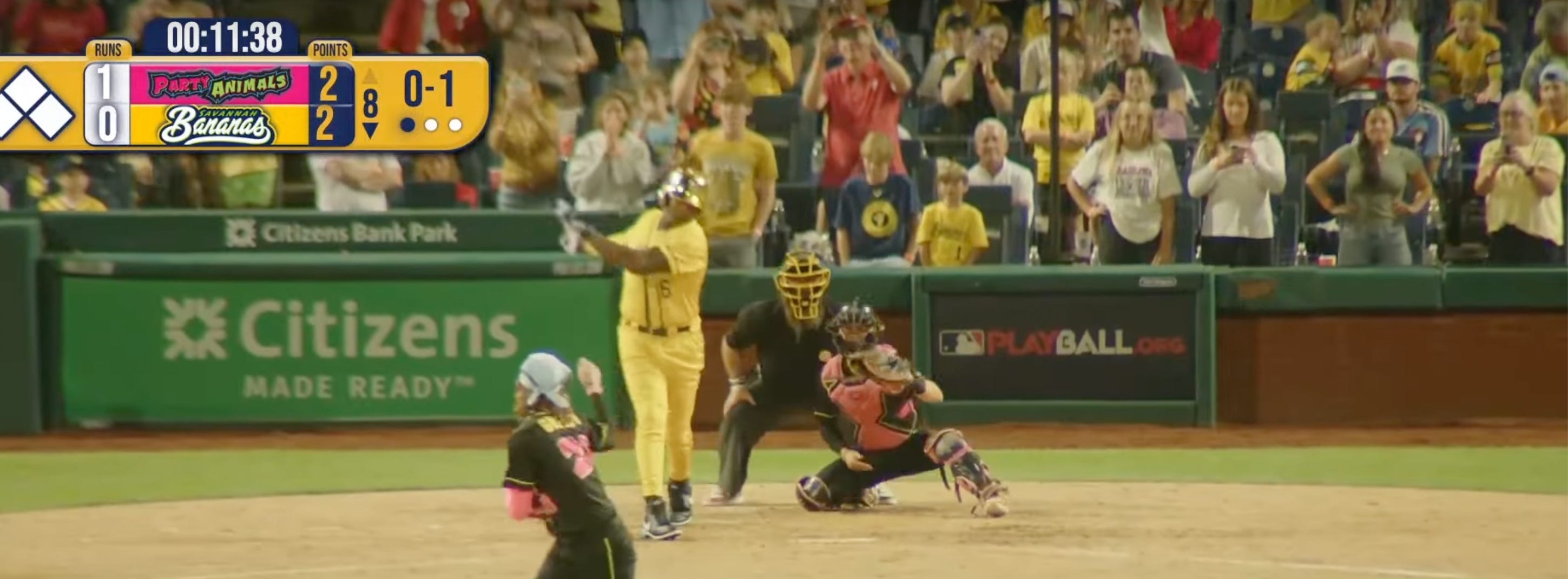
2. Crowd behavior is wildy inconsistent. In nearly identical situations some stadiums rise and some stadiums sit, and I can’t really formulate an obvious explanation for the standers that’s based on geography, team quality, team history or anything like that. To give an example from ball that exists purely to create energy, this is Ryan Howard—World Champion and three-time All-Star with the Phillies, 300-some career homers, single-season franchise home run record holder—hitting for the Savannah Bananas in Philadelphia:
and this is Troy Glaus—World Champion and three-time All-Star for the Angels, 300-some career homers, single-season franchise home run record holder—hitting for the Savannah Bananas in Anaheim:
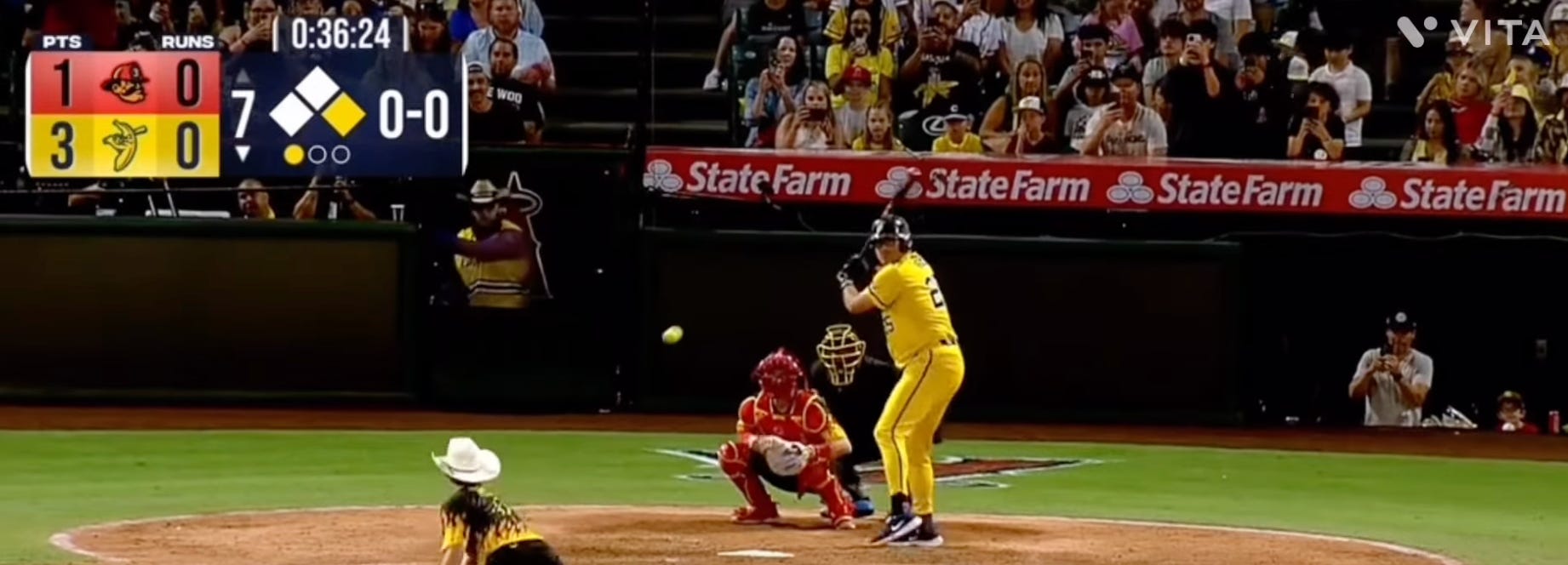
The Anaheim game had just as much energy. For some reason, only a few people directed that energy into standing up. So there’s some extra ingredient required, beyond the basic product itself, and teams might want to put some work into finding that ingredient (beyond just giving a sign to an Energy Squad).
3. It might be more about the obstacles to standing than the incentives for standing.
On Day 55 of the 2025 Baseball Season, the White Sox, the lowly White Sox, were hosting the Mariners. There had been a long rain delay earlier in the evening, and a Feels Like temp of 44 degrees in Chicago, so the small crowd had thinned to a few, oh, dozen? Not much more than a few hundred, at least. The White Sox were ahead 1-0, the bases were loaded, Julio Rodríguez was hitting for the Mariners.
The home team was pitching, which makes it a different situation than we’ve been talking about, but it was nevertheless striking to see both broadcasts finding fans standing up throughout the stadium, some in White Sox gear and some in Mariners gear, some even waving their arms to compel other fans up. John Schriffen on the Chicago broadcast, marveling at all that standing: “These are the real ones! These are some die-HARDs. Gotta love ‘em!”
The real ones, I think, are aching to stand. They would stand 30 times a game. When they get a nearly empty stadium, populated exclusively by real ones, there is no social awkwardness about being the only one up, since that becomes a Real Ones convention. A standing-only room.
The question, for a fan, is whether, under ordinary circumstances, we’re being generous to our neighbors by staying seated. We’re not blocking their view, which is kind. I think those are the manners we think we’re upholding.
But we’re also not contributing to the critical mass that turns standing up into a socially acceptable act, which means we are contributing to a wan, forgetful experience for everybody. If large crowds standing up to pro-socially enthuse with each other is a public good, then somebody has to be the person in the poncho willing to go first. To be clear: It will never be me. But I’m hoping baseball somehow finds a bunch more of them.
Any excuse to post this again:
Previously: Days 36 & 37 Of The 2025 MLB Season
Next: Days 39 & 40 & 41 Of The 2025 MLB Season
American fans don’t naturally stand or cheer at sporting events. This is why we are still reminded to stand before the national anthem! And why “everybody clap, clap, clap your hands” must be blared on the speakers and the mascots dancing on the dugout waving a flag in crucial moments.
This isn’t only professional sports. I was at a 12-year-old rec playoff baseball game, and the parents weren’t even standing for their kids in crucial moments. They remain glued to their tent chair or on the hard bleachers.
This is why people find the statement “I stand with (fill in the blank)” so impactful! What a sacrifice!
Corollary question, given the social pressure to stand or sit: When >70% of the crowd is standing, why aren't the other 30%?!