
The Swing Paradox
1) The oddest catcher's interferences 2) Foul ball ambiguities

Day 36 Of The 2025 MLB Season
There’s a decent chance that the weirdest thing you’ll see in any given day’s ball will involve a catcher’s mitt nudging a hitter’s bat on a pitch that’s up and in. Before we get into the events of Day 36, I’ve got to hop forward a few weeks to show you a couple of pitches—
First, we’re going to Day 63, and a play that went to replay review:
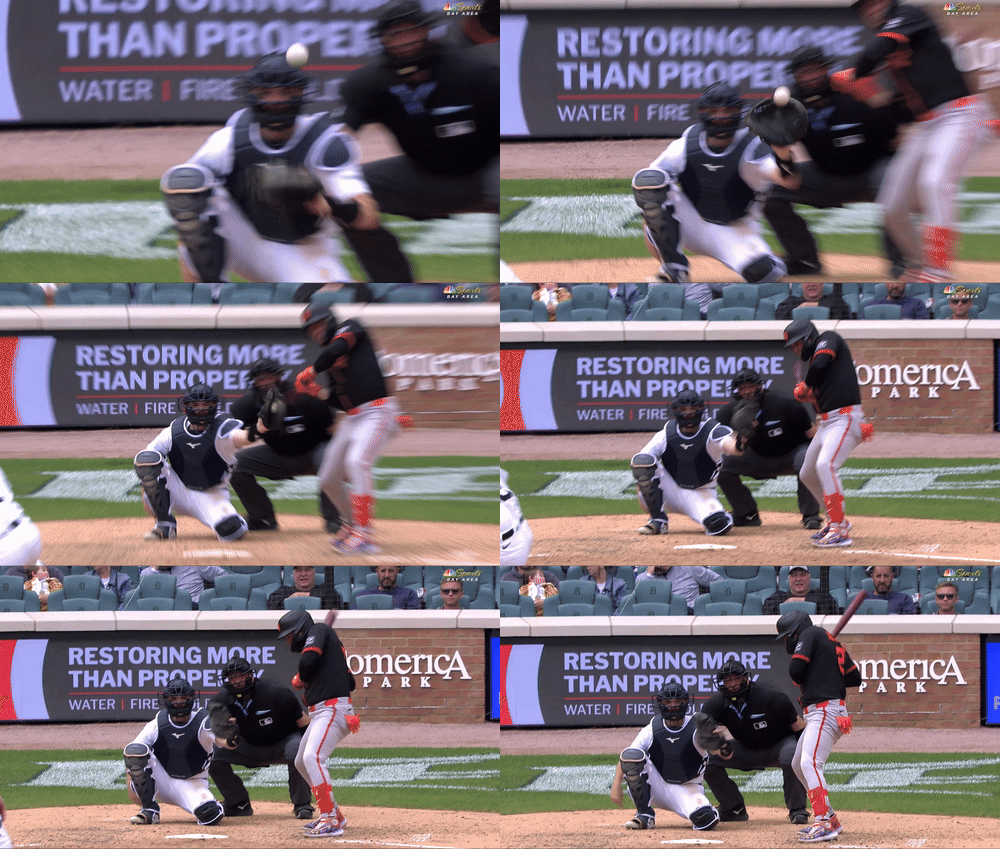
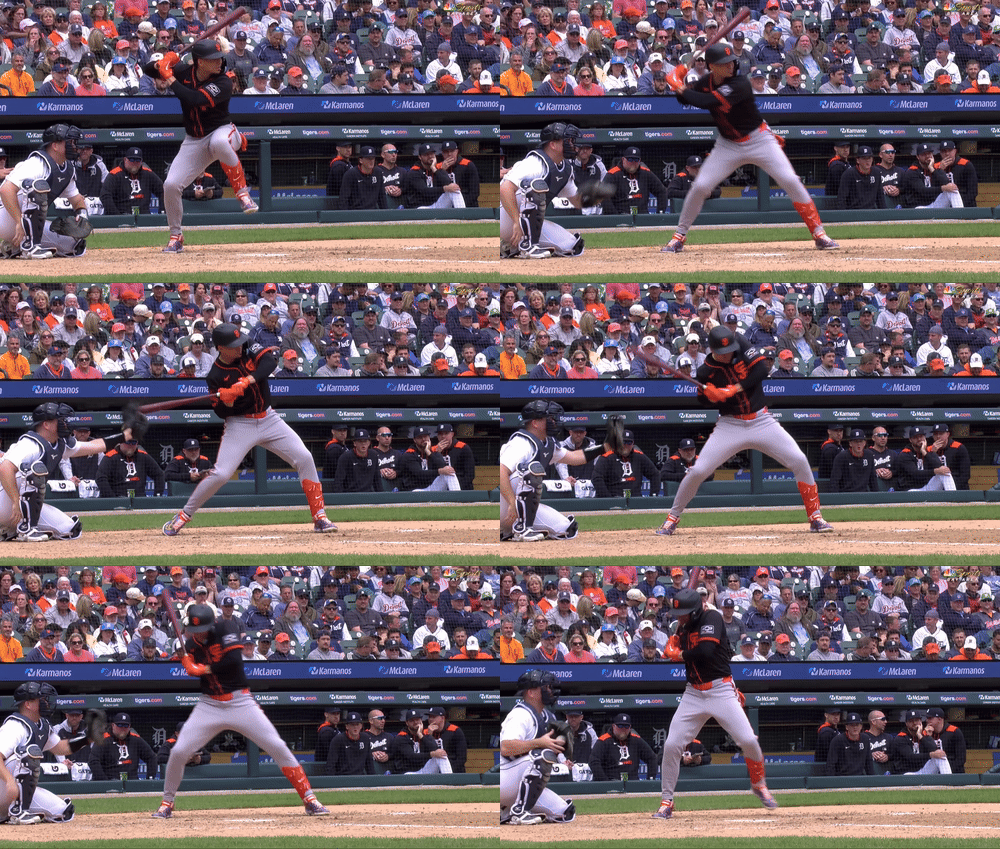
Did you see it? You didn’t see it. Nobody saw it. Umpire didn’t see it, broadcast booths didn’t see it, pitcher didn’t see it—only two people in the world knew that Willy Adames even moved his bat: Adames, and the catcher whose glove he touched:
The rulebook language on catcher’s interference is concise:
(b) The batter becomes a runner and is entitled to first base without liability to be put out when:
(3) The catcher or any fielder interferes with him
That’s it. When the catcher interferes with what the batter is doing, that’s interference. When the batter is swinging, the catcher isn’t allowed to interfere with the swinging. Can the catcher interfere with a batter who is taking? Can you impede a hitter from not doing something? How would that work?
So a question might be: Was Adames swinging, was he doing something that could be interfered with? The evidence against is:
That would never have been called a swing, had they appealed to the first base ump1;
Adames was trying to avoid, not strike at the ball;
He’s literally grimacing from his efforts to not swing;
His contact with the glove came after he’d shut down the swing, and it was in fact caused by the recoiling effect of his hands stopping;
And if he had swung for real, the barrel of the bat probably wouldn’t have traced that path, because Adames would have been casting his hands forward.
The other side of the argument, that it was a swing, is: Once a bat touches something, it becomes a swing, regardless of effort or intent. A batter who is holding his bat stationary above his head will be called for a foul ball if the pitch hits the bat. If it’s a foul, it becomes a swing, and the same logic apparently applies to catcher’s interference:
Not a swing until
It hits the mitt at which point
It retroactively becomes a swing
Which the mitt interfered with
In the act of making it a swing.
***
The rulebook seems to grant the catcher no grace, no leeway, when it comes to touching bats. But how far does that logic extend?
Let’s roll back to Day 45, and a play that also went to replay review:
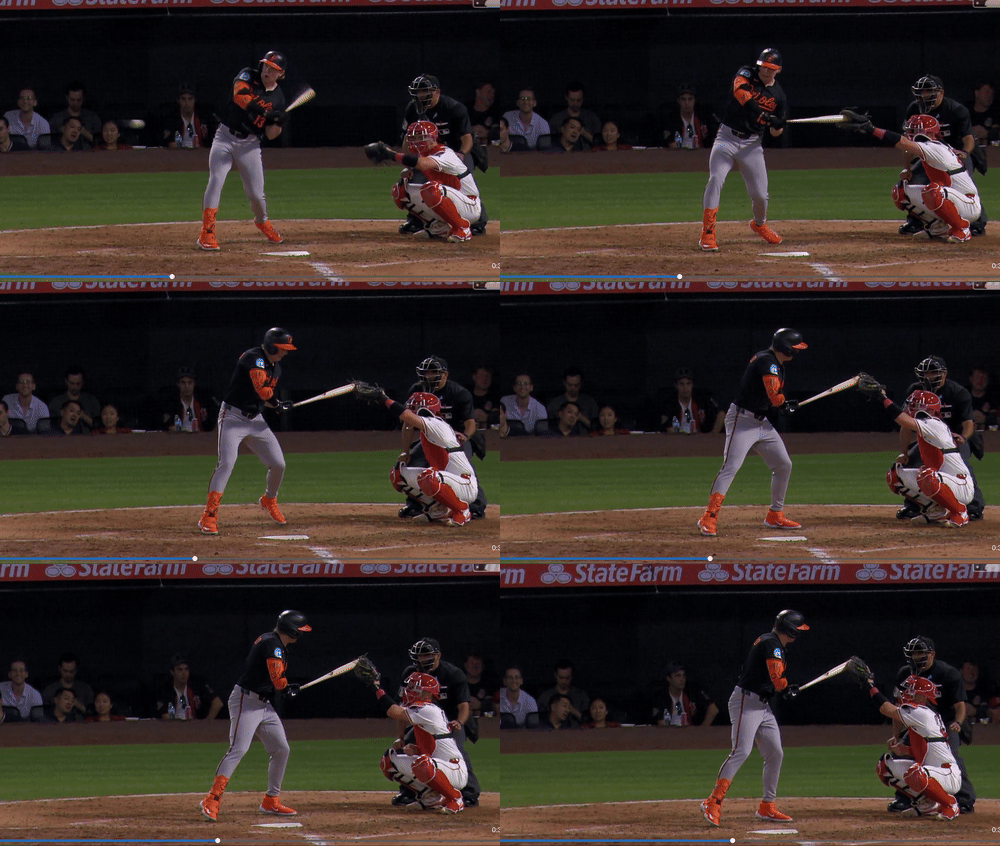
Did you see it? Lol, you saw it, everybody saw it, Heston Kjerstad’s whole bat barrel got stuck in the catcher’s mitt like it was netting. Kjerstad hadn’t really gone much farther than Adames, but he hit the glove and he demanded his base. Only problem was: Kjerstad hit the ball first, and the ball knocked his bat back into the glove.
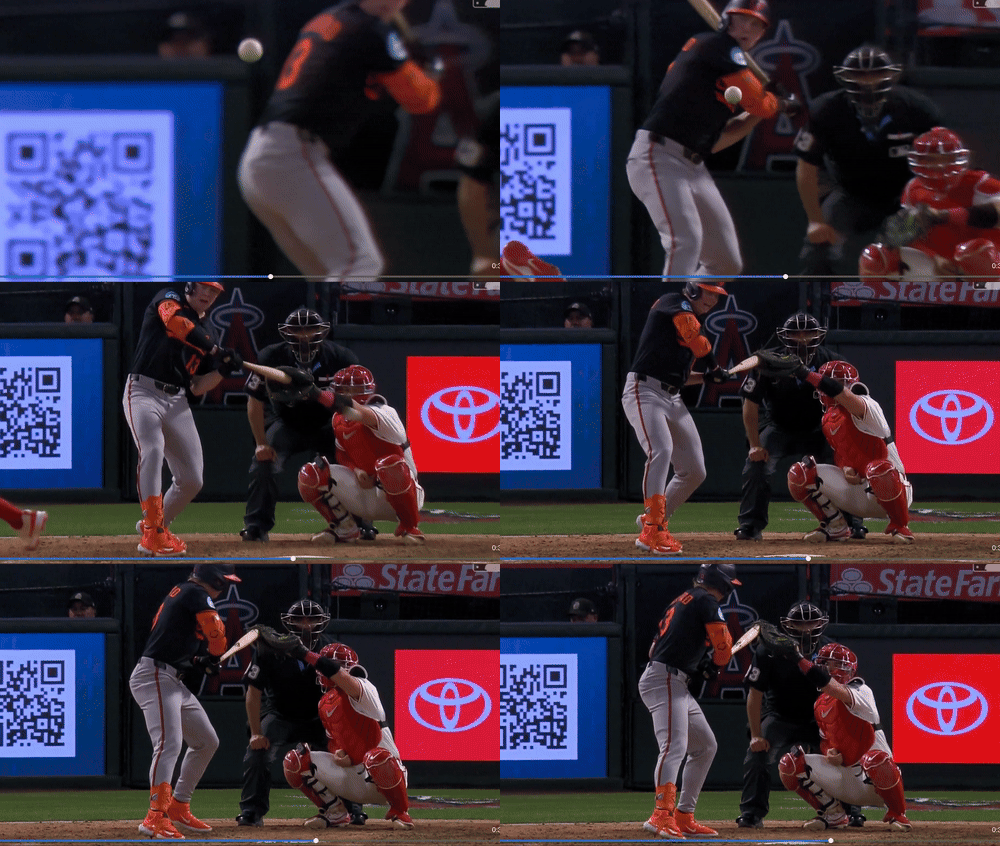
On review the call went against him, which I think is appropriate—once the ball has been hit, I think it’s reasonable to say the swing can longer be interfered with,2. And if the bat is moving backward, it seems reasonable to say it can’t be interfered with3. The best case for Kjerstad is a) the catcher’s mitt certainly would have hit his bat even if his bat hadn’t hit the ball and b) the catcher’s interference rule is weird/vague/paradoxical enough that it’s not clear there are any constraints to it. If Willy Adames gets a CI without even swinging, then why shouldn’t Heston Kjerstad get one when (by fouling the pitch off) he technically did?
I don’t think that’s a persuasive argument. This rule so struggles with common sense that I don’t think it’s an entirely implausible interpretation, but, no, I think we’ve found the limit to the rule: You can’t get a catcher’s interference after you’ve already hit the ball. Finally, some sense! Kjerstad and the Orioles lost their challenge.
**
Now, back to Day 36. Early in the day, Josh Naylor had one of these situations happen to him:
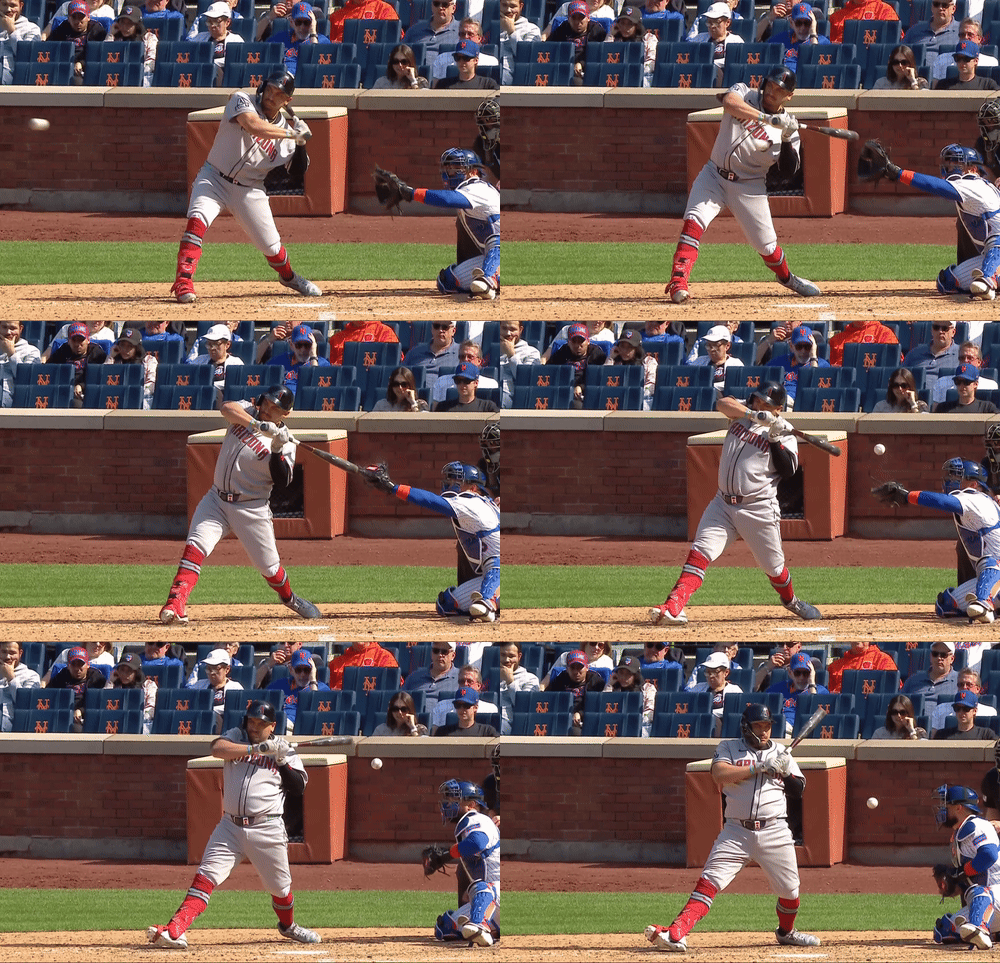
The call on the field was foul ball, though Naylor hit only mitt, no ball.
Last year, Ted Baarda wrote a piece for Sports Info Solutions about “the silent contributor to the rise of catcher’s interference,” which is video review. Naylor, like Adames, needed video review to get the call to go his way. Unlike the more traditional catcher’s interference—on a real swing—this type of CI doesn’t cause the noticeable “tick” sound that home-plate umpires can hear. This umpire, like the Adames umpire, had no idea.
Thus, this type of catcher’s interference is something of a video review invention, kind of like how the “sliding runner’s foot pops off the base by a millimeter for a millisecond so he’s out” is a video review invention. That sliding-runner-millimeter type of overturned call is nearly universally hated for being “not in the spirit of video review,” since nobody on the field (not even the participants in the play) can even tell the separation happened.
This checked-swing-nudged-bat-catcher’s-interference type of overturned call is in the spirit of video review, since the participants in the play—catcher and batter—know the violation happened. I don’t think it’s in the spirit of the catcher’s interference rule. But that’s not video review’s problem.
So Josh Naylor turned to his dugout and said “review review!” and his dugout, competent folks in there, said “we’d better review!” The player’s role in this situation is to say he was interfered with, and the dugout’s role is to ask for the review, so that umpires can get the call right. Everybody did their job.
The video review came back positive. Naylor went to first, loading the bases in the ninth inning of a close game.
**
A few hours later, the very same day, Ryan McMahon also had one of these situations happen to him:
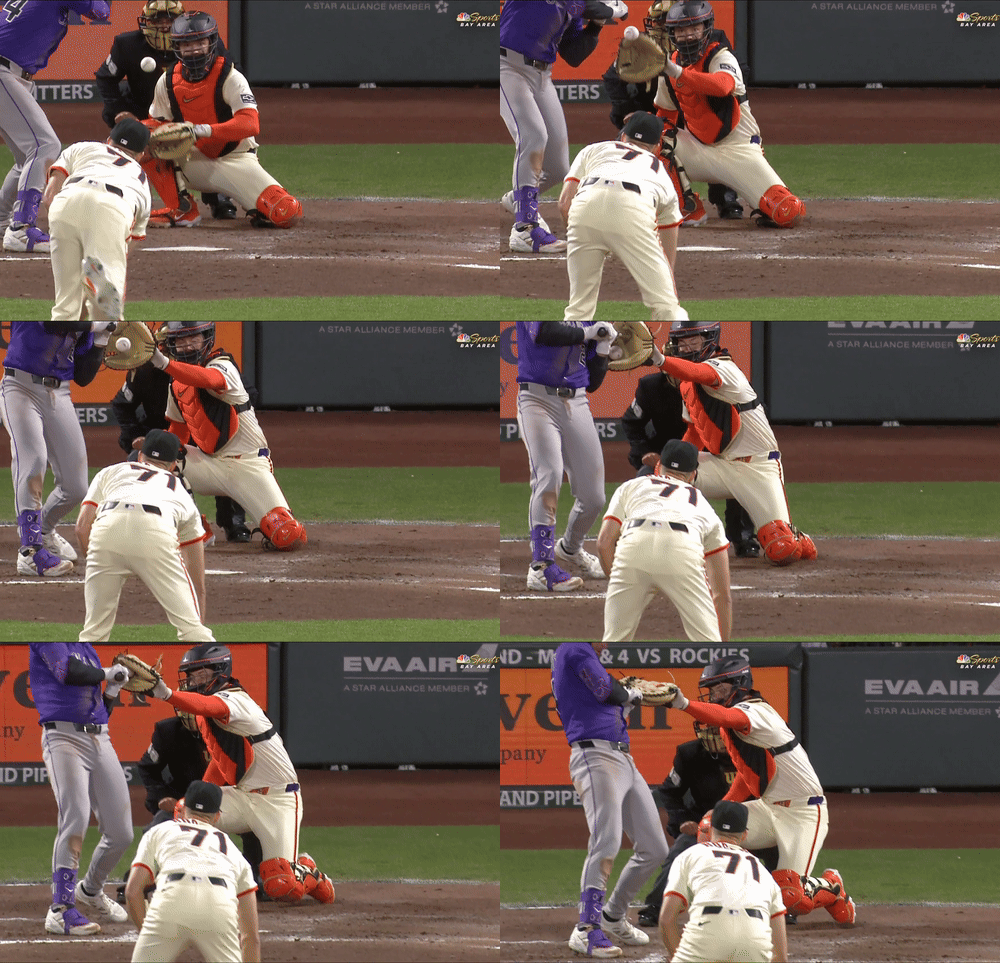
What’s the call there? It’s not a real swing, obviously—the call on the field was “ball”—but it’s as much of a swing as Naylor or Adames made. McMahon’s bat is clearly in the mitt, a la Kjerstad, and unlike Kjerstad he didn’t foul the pitch, and his bat was in the mitt before the ball got there, as you can clearly see:
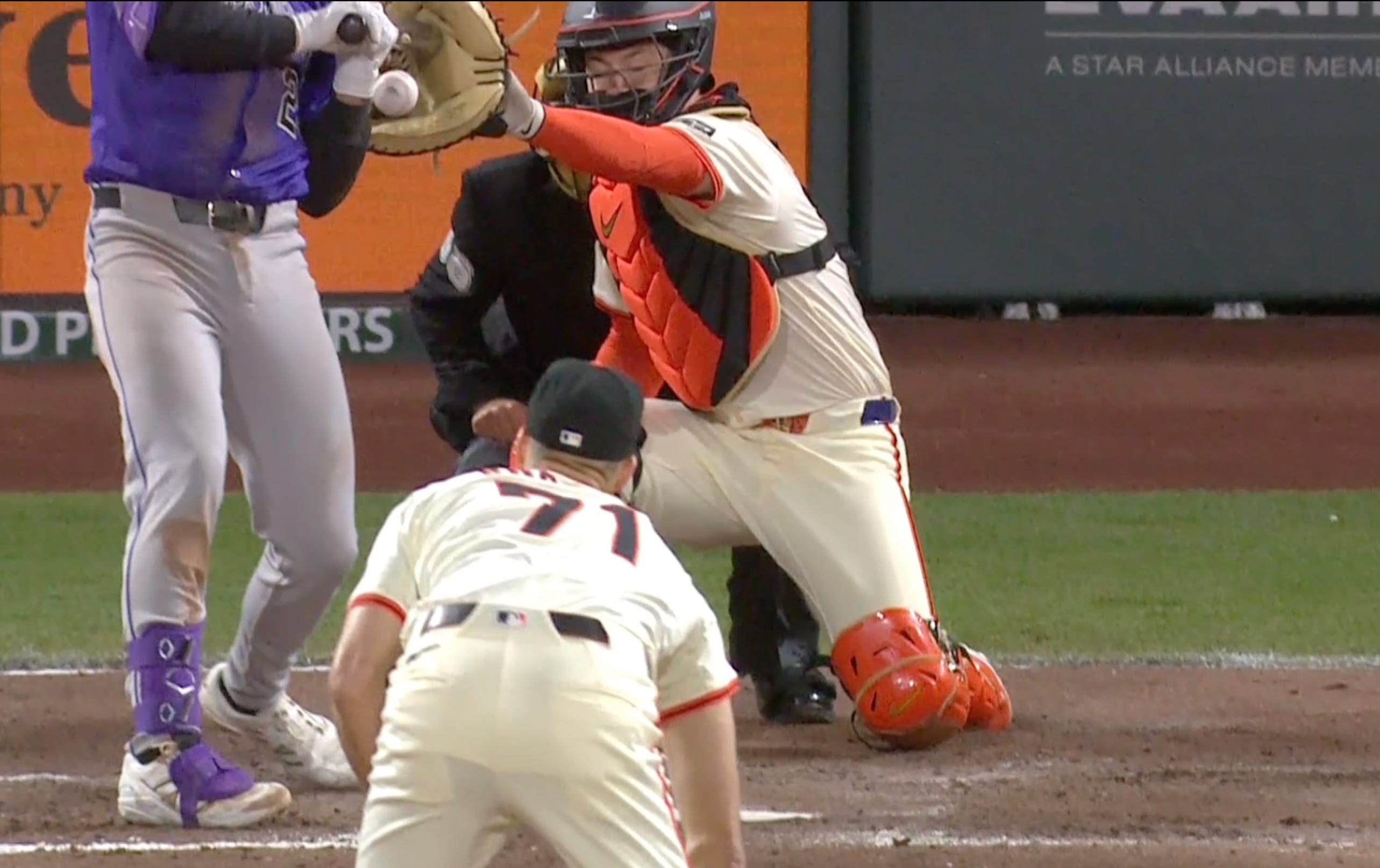
So, despite looking weird, it’s fairly unambiguous as the rule is currently applied: That’s a catcher’s interference. So Ryan McMahon turned to walk to first base and the umpire said “huh?” McMahon said “catcher’s interference?” and the umpire said “I dunno.” McMahon glanced to the dugout, then back to the umpire, like “my whole bat was in his whole mitt, man, it was pigs in the blanket” and the ump said “not my problem anymore.” So McMahon turned to his dugout—
—and, apparently, decided nobody looking back at him cared. Nobody in the dugout held a hand up. No manager said “what’s that you’re saying, Mac?” Play just went on, without a challenge. It was the eighth inning, it was a one-run game, and the Rockies just couldn’t be bothered.
McMahon even did a whatever hand wave:
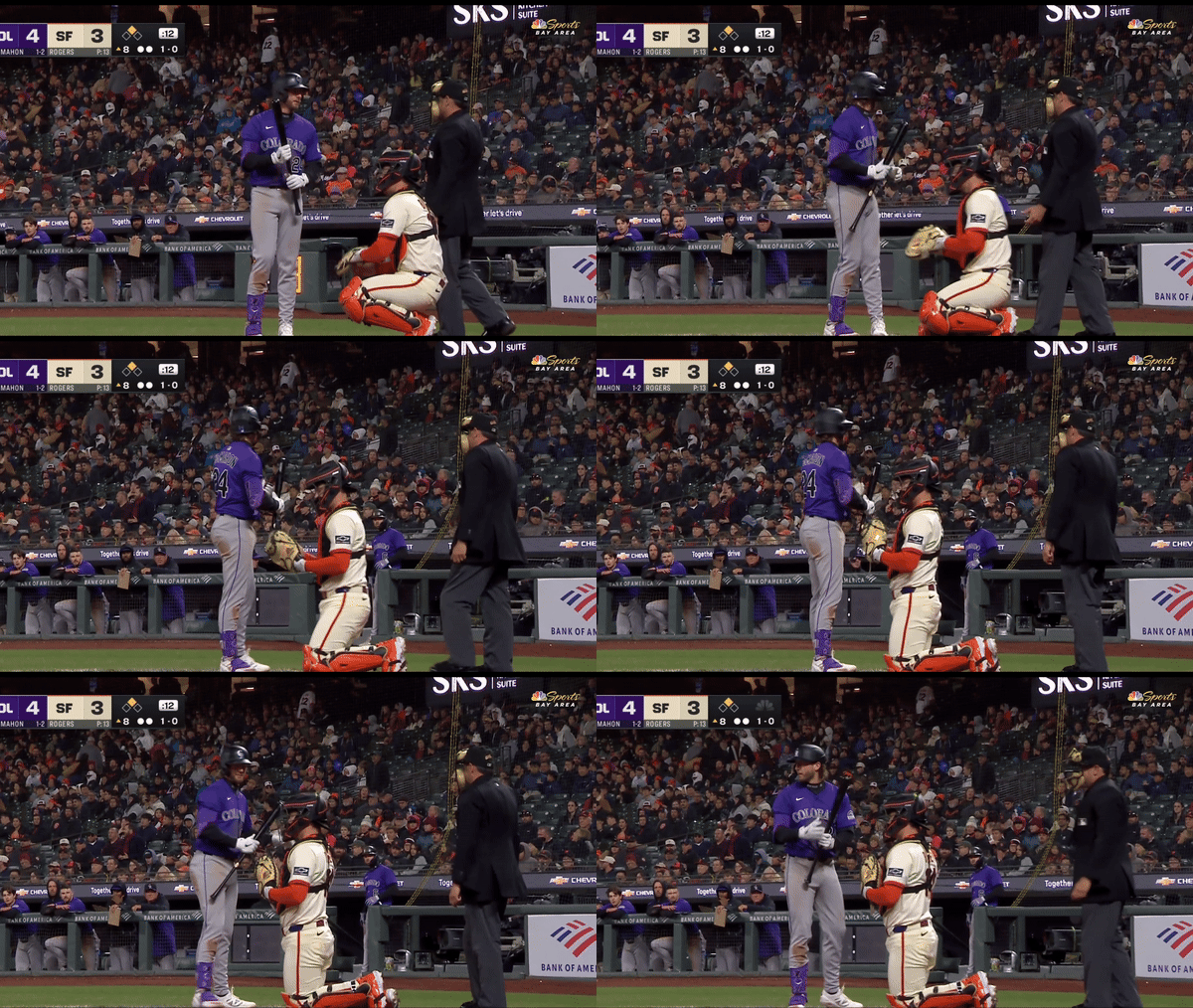
That, my friends, is the look of a team that’s going to set the all-time record for losses, and whose manager was 10 days away from being fired.
*
*
*
Day 37 Of The 2025 MLB Season
